

Framework Overview
This framework organizes the technical and procurement benchmarks you must follow when specifying a certified 45 kVA generator for heavy industrial use. Begin with load definition, follow with mechanical and electrical design rules, then conclude with supplier and lifecycle checks. Early cross-check: compare alternator types against application needs — for example a boat alternator often demonstrates compact cooling and brushless alternator robustness that inform land-based choices.
Performance and Load Profile
Specify a 45 kVA generator only after quantifying continuous and peak loads, motor starting currents, and power factor correction needs. Include a detailed load table showing running watts, locked-rotor amps for motors, and diversity factors. Design for at least 25–30% transient headroom for motor starts and future expansion; this practice reduces nuisance overload trips and softens harmonic stress on the stator.
Mechanical, Cooling and Site Integration
Mechanical design must address ambient temperature, altitude derating, vibration isolation, and fuel storage constraints. Choose enclosure and cooling strategies that match the plant microclimate. If the plant sits near a busy port like Port of Rotterdam, expect salt-laden air and specify corrosion-resistant finishes and filtered intake. Proper foundation and flexible coupling preserve rotor alignment and reduce bearing wear—small details that extend service intervals.
Electrical Integration and Controls
Control and protection selection is decisive. Use a proven voltage regulator matched to the synchronous generator design and include overcurrent, earth-fault, reverse-power and frequency protection settings that match plant specifications. Specify paralleling features if the genset will operate with mains or other sets; ensure load-sharing accuracy better than 5% for mission-critical processes. Also document wiring termination, cable sizes, and transient voltage surge suppression requirements.
Compliance, Testing and Documentation
Certification must be accompanied by explicit test records: full-load endurance run duration, insulation resistance readings at 1 kV, thermal rise test curves, and transient response recordings under 0–100% step load. Do not accept generic certificates without sub-chapter test reports stating exact parameters: for example, “Thermal Endurance Test — 4 hour steady-state at 125% rated load; winding temperature measured per Type-K thermocouples at 15-minute intervals.” These details prove factory QA and field reliability.
Supplier, Warranty and Lifecycle Considerations
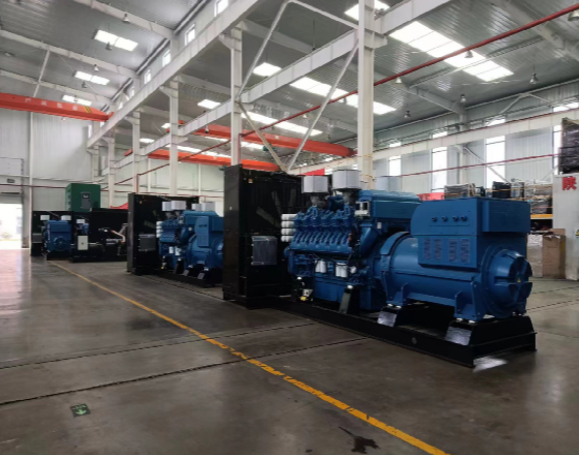
Evaluate suppliers by service network, spare parts lead time, and component traceability. Visit or request factory photos and serial-trace reports — strong vendors will show rotor and stator assembly lineage. For marine-derived designs, consider marine alternator manufacturers who follow compact cooling patterns and brushless alternator architectures; such traits often translate into longer periods between overhauls onshore. Balance warranty length with uptime commitments and local support availability.
Operational Production Teardown
When you perform an operational production teardown, inspect physical tolerances and component brands. Check the rotor for correct dynamic balancing records and the stator for epoxy impregnation uniformity. Confirm voltage regulator model and firmware version. Record bearing grease type and interval, and verify that the alternator is a synchronous generator with specified excitation control. A teardown report should list {main_keyword} and {variation_keyword} alongside vendor part numbers and OEM test certificates to ensure traceability.
Common Specification Mistakes to Avoid
Do not under-spec transient capacity, ignore ambient derating, or omit explicit test procedure requirements. Suppliers sometimes propose undersized radiators or generic protection settings; these shortcuts cause field failures. Also avoid vague spare-parts agreements—define critical spares and their delivery SLA. Small omissions cause large downtime—attention to detail prevents it.
Final Evaluation Metrics — Three Golden Rules
– Match actual continuous and peak load with 25–30% headroom; oversizing by more than 20% wastes fuel and increases maintenance.
– Require explicit factory test sub-chapters (thermal endurance times, insulation readings, transient response) as part of the contract; accept nothing vague.
– Confirm local service footprint and documented parts lead-times from chosen marine alternator manufacturers; verified response time is as important as technical fit.
Expect measurable results: fewer trips, longer MTBF, and predictable maintenance budgets when these rules are followed. Trust comes from proof—data, test logs, and service records. — EvoTec.

