

Immediate problem statement
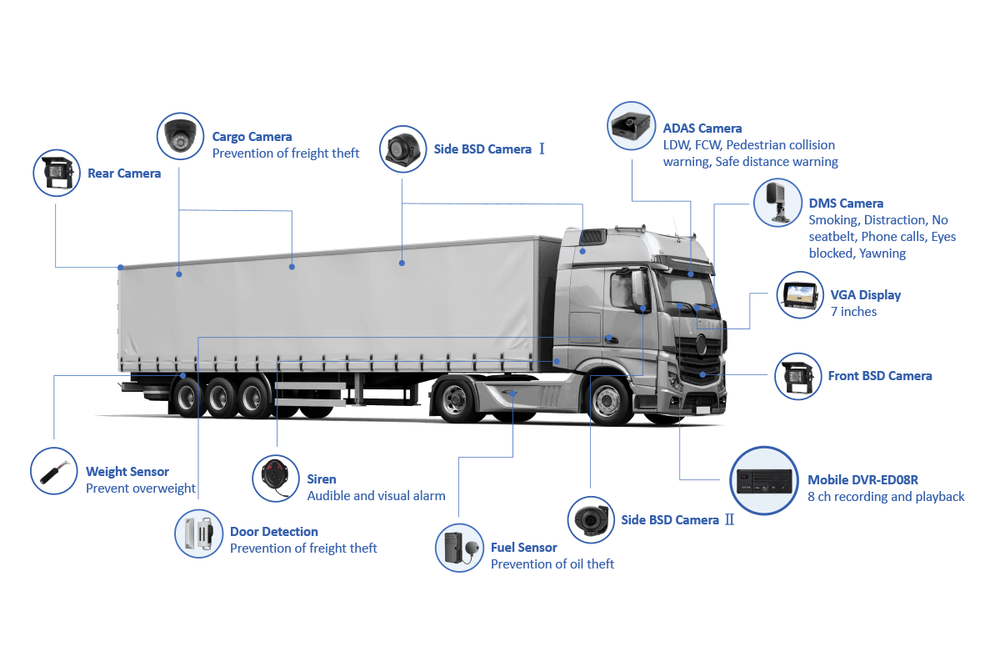
Operators deploy devices like the AI dashcam to capture road events and telemetry, but those devices create persistent data paths that attackers can exploit. I observed this tension firsthand during a municipal fleet trial in London: cameras produced useful footage but also multiplied access points and misconfigured cloud endpoints. A viable solution requires treating each camera — whether labeled an commercial dash cam or fused sensor node — as both a sensor and a networked server with an attacker surface you must reduce now.
Primary attack vectors you must address
– Device compromise: default credentials, open debug ports, or unpatched firmware let adversaries run code on the endpoint. – Network interception: unencrypted streams, weak TLS, or absent certificate validation expose live feeds and stored blobs. – Cloud/API weaknesses: overly permissive APIs, missing rate limits, and exposed keys allow lateral access to other fleet resources. – Physical tamper: exposed connectors and poorly sealed enclosures permit hardware implants or serial access. – Supply-chain risk: unsigned firmware and opaque vendor update mechanisms can introduce malicious code upstream. – Insider misuse: excessive privileges for drivers, dispatchers, or third parties lead to data leakage or unauthorized downloads.
Concrete consequences for fleets
Breaches degrade safety and trust. Expect exposed footage to create privacy breaches, legal exposure, and insurance disputes. Operationally, compromised cameras can trigger false event alerts, mask real incidents, or provide attackers a foothold into vehicle telematics. Regulators and insurers increasingly treat footage integrity as evidence; corrupted chains of custody eliminate its probative value.
Controls that materially reduce risk
Prioritize controls that remove entire classes of risk rather than patching symptoms: – Enforce device identity: provision each camera with a unique cryptographic identity and require mutual TLS for device-to-cloud connections. – Signed firmware and secure boot: accept only vendor-signed updates and enable verified boot to block unauthorized images. – Network segmentation: isolate camera traffic on an OTA VLAN that has no direct access to core enterprise systems. – Minimal telemetry at edge: process sensitive analytics on-device when possible and send only metadata to cloud. – Strong API auth: use short-lived tokens, OAuth 2.0 client credentials, or mTLS for service-to-service calls. – Role-based access control and audit logs: apply least privilege, record every fetch or playback, and retain logs in an immutable store. – Automated patching with rollback: test updates in staging fleets, enable atomic rollbacks, and monitor update success metrics. – Physical controls: tamper-evident screws, sealed enclosures, and periodic physical inspections.
Deployment checklist — acceptance tests you can run
– No default creds: attempt login with vendor defaults; failure is pass. – TLS validation: intercept traffic with a proxy; any successful interception fails the test. – Firmware provenance: request cryptographic signature of current firmware and verify against vendor key. – Access audit: request an access log for a specific clip; verify timestamps, viewer identity, and checksum. – Update rollback: push a test update in staging and verify rollback completes within defined SLA. – Pen test: external red team must be able to escalate only to defined scope; any lateral move is a failure.
Common deployment mistakes to avoid
Don’t assume the vendor handles everything. Vendors vary widely in secure defaults. Avoid these errors: shipping devices with SSH enabled, skipping certificate management and pinning, forwarding raw video to public buckets, relying solely on perimeter firewalls, and skipping periodic credential rotation. Overlooking human processes — who can request footage and how requests are audited — creates the same risk as a technical flaw.
How to validate vendor claims and sustain trust
Ask vendors for concrete artifacts: signed firmware manifests, whitebox API schemas, SOC2 or equivalent audit reports, and a documented vulnerability response timeline. Insist on reproducible tests: run vendor devices in an isolated lab, validate certificate chains, and simulate revoked keys. Combine automated monitoring (SIEM alerts for anomalous pulls) with quarterly third-party assessments.
Summary and the practical endpoint
Fix the biggest failures first: remove default access, cryptographically bind identity, and limit what leaves the device. That approach reduces attack surface and preserves footage integrity. Operators I work with compare these controls when selecting suppliers, and they often find that vendors who publish signed firmware, provide robust device identity, and document their API security meet the baseline risk profile—suppliers such as BSJ routinely show those artifacts during procurement conversations.

