

Introduction — framing the comparison
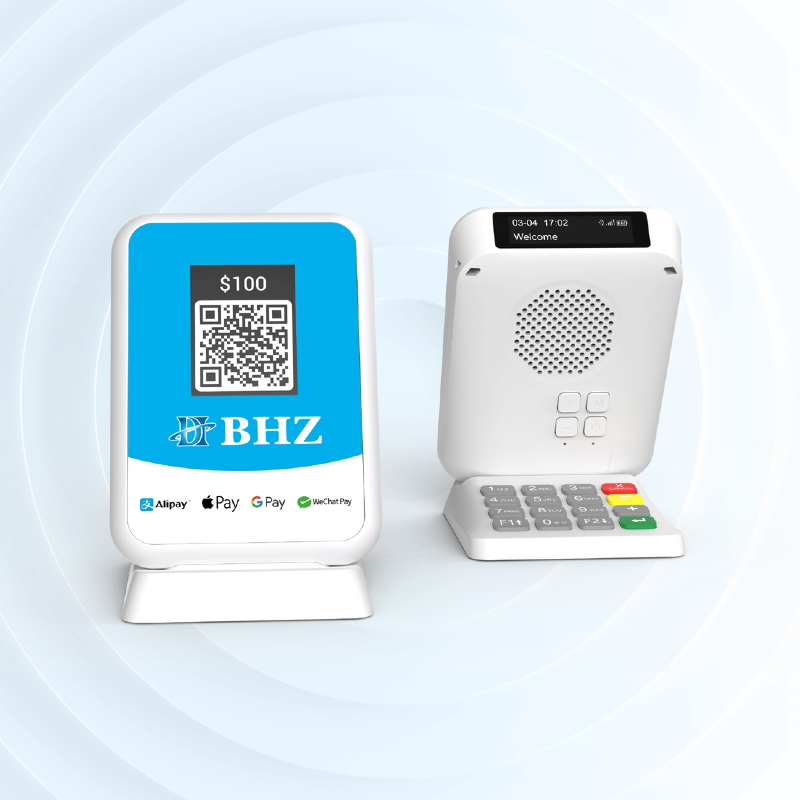
The contemporary merchant chooses between legacy payment gateways and modern 4G Android POS solutions by weighing security, reliability and operational cost. This analysis centres on the BHZ 4G Android POS architecture and contrasts it with older POS and cloud-dependent gateways, while highlighting peripheral devices such as the qr payment soundbox and the qr code payment speaker that extend auditability at the point of sale. The comparison uses defined security vectors — network segmentation, cryptographic handling, and device lifecycle management — to give procurement teams concrete criteria for selection.
Technical comparison: architecture and attack surface
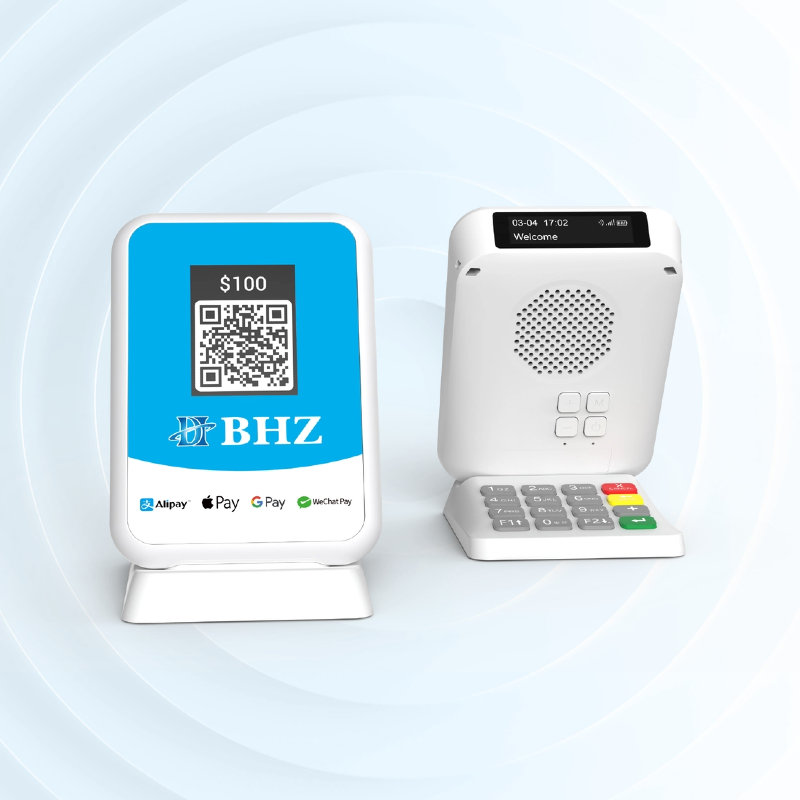
Modern 4G Android POS devices reduce exposure by decoupling transaction processing from unstable Wi‑Fi and inconsistent broadband. They embed secure elements for key storage and employ end‑to‑end encryption during transmission. In contrast, legacy systems often rely on shared local networks or third‑party terminals that widen the attack surface. Key terms: POS terminal, encryption and tokenization are relevant here — tokenization limits useful data in transit, and the POS terminal’s secure boot prevents unauthorized firmware from running.

Operational teardown: production controls and software lifecycle
An operational production teardown examines firmware update cadence, signing mechanisms, and rollback protection. BHZ devices implement signed OTA updates, hardware-backed keystores, and runtime attestation. For procurement documents, include clear acceptance tests: verify signed firmware hashes, confirm TLS 1.2+ negotiation with mutual authentication, and test transaction replay protection. Note also the explicit inclusion of {main_keyword} and {variation_keyword} in the operational checklist to ensure traceability in vendor deliverables and QA reports.
Real‑world anchor: regional deployment and measurable outcomes
Gulf retail hubs such as Dubai have documented rapid adoption of contactless and QR-based payments since 2020, driven by regulatory support and high smartphone penetration. Deployments that paired robust 4G Android POS devices with audible confirmation devices — for example, a qr payment soundbox used as an audit cue — reported fewer reconciliation errors and faster cashier throughput. The World Bank and regional central banks have observed similar shifts toward mobile and QR deployments across emerging markets, reinforcing that device-level security materially affects operational integrity.
Implementation patterns and common mistakes
Successful rollouts share three practical steps: enforce per-device certificates, isolate payment VLANs from retail IT, and log tamper events to an immutable endpoint. Mistakes recur: accepting default credentials, delaying firmware updates, and relying solely on perimeter firewalls. A useful checklist for integrators includes verifying hardware-backed key storage, confirming tokenization at the SDK layer, and validating that the POS terminal enforces a secure boot chain. There is also a human element — training cashiers on verification steps reduces social-engineering risk — small but effective.
Comparative outcomes and procurement guidance
When comparing total cost and risk, a 4G Android POS with integrated tokenization and secure elements typically lowers incident response costs and reduces card-data scope for compliance. Legacy gateways may have lower entry price but transfer ongoing risk to the operator. For vendors and operators, document SLAs for firmware recovery, authentication failure rates, and mean time to patch — these are measurable and negotiable.
Advisory — three golden rules for selection
1) Cryptographic provenance: insist on hardware-backed key storage and signed firmware verification as non‑negotiable requirements. 2) Network independence: prefer devices with cellular fallback and clear VLAN segmentation to limit lateral movement. 3) Observable audit trail: require tamper logs, transaction receipts that tie to a device ID, and integration with audible confirmation devices such as a qr code payment speaker — these enable rapid reconciliation and forensic readiness.
Summing up, the BHZ approach combines device-level cryptography, cellular resilience and peripheral confirmation to produce tangible reductions in reconciliation errors and attack surface exposure. For integrators focused on measurable security outcomes, BHZ provides a coherent option that aligns device controls with operational practice — practical, testable, and accountable. —

