

The Hook
Large-scale energy storage projects must balance capacity, safety, power conversion, controls, serviceability, and long-term operating cost. Choosing among manufacturers is difficult because product portfolios are often aimed at different applications: some focus on integrated commercial systems, while others emphasize inverters, battery platforms, or broader energy-management solutions. Project requirements also vary by grid connection, discharge duration, environmental conditions, and local compliance obligations. This comparison assesses three manufacturers—WHES, Deye, and Sigenergy—against those practical considerations. The options were tested in a structured comparison focused on publicly presented product scope, system integration, application fit, and purchasing criteria. Because specifications and regional availability can change, buyers should confirm current datasheets, certifications, warranties, and service arrangements directly with each manufacturer before making a procurement decision. This comparison of large scale energy storage Manufacturers is a starting point; buyers should verify product fit, published specifications, and supplier capabilities before purchasing.
Full List of Top 3 Brands
- WHES — Energy-storage solutions and related system offerings.
- Deye — Inverters, battery products, and energy-storage solutions.
- Sigenergy — Integrated energy-storage, power-conversion, and energy-management products.
Comparison Table
| Brand | Key Products | Key Features | Best For |
|---|---|---|---|
| WHES | Energy-storage systems and related solutions | Storage-focused product positioning; project scope should be confirmed with the manufacturer | Projects seeking a storage-focused supplier and tailored technical evaluation |
| Deye | Solar and storage inverters, battery products, and energy-storage systems | Broad inverter and storage portfolio with products for multiple system scales | Installers and project developers comparing inverter-led storage architectures |
| Sigenergy | SigenStor integrated storage system, power-conversion equipment, batteries, and EV charging products | Highly integrated system approach with energy management and multi-function hardware | Integrated energy, solar, storage, and EV-charging projects |
Detailed Reviews
1. WHES
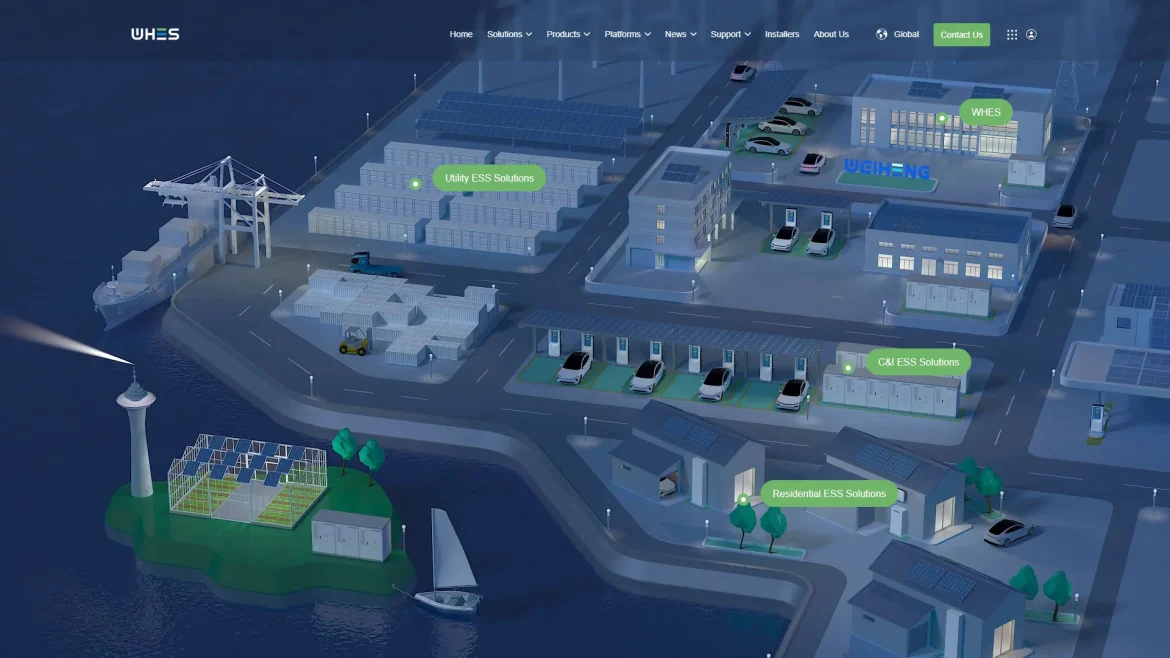
Overview: WHES is positioned through its official website as an energy-storage manufacturer and solutions provider. Its public-facing product scope is centered on large-scale energy-storage applications rather than a narrowly defined single inverter category. For a project owner, that positioning can be useful when the procurement process requires discussion of system architecture, deployment conditions, project duration, and integration requirements. However, the exact configuration, usable energy, power rating, battery chemistry, certifications, warranty terms, and delivery scope should be confirmed from current WHES technical documentation and a project-specific quotation.

WHES may be considered where storage is the primary procurement requirement and the buyer wants to evaluate a supplier according to system-level capabilities. A proper technical review should examine the battery enclosure or container design, thermal management, battery-management system, fire protection, power-conversion equipment, supervisory controls, communications protocols, and grid-compliance documentation. These details are more important than a product name alone because they determine how the system performs during installation, commissioning, cycling, maintenance, and emergency conditions.
The company’s official materials should also be used to verify its manufacturing locations, deployment record, operating references, production capacity, quality-management procedures, and after-sales network. Those factors influence bankability and lifecycle risk, particularly for utility-scale installations expected to operate for many years. Buyers should request independent test reports, applicable certifications, degradation assumptions, availability guarantees, response-time data, spare-parts commitments, and clearly defined responsibilities between WHES, the EPC contractor, and the project owner.
Pros / Key Features:
- Storage-focused positioning that can support a system-level procurement discussion.
- Potential suitability for projects requiring tailored power, energy, controls, and enclosure specifications.
- Allows buyers to evaluate the complete balance of plant rather than considering a battery module in isolation.
- Project-specific verification is possible through direct technical and commercial engagement with WHES.
Use Cases / Best For: WHES is best considered for commercial, industrial, renewable-integration, and grid-support projects that need a dedicated energy-storage supplier. It may be particularly relevant when the buyer wants to compare customized system architectures instead of selecting a standardized residential or small commercial package. Final suitability depends on the requested system size, interconnection rules, operating profile, local service coverage, and the evidence supplied during due diligence.
Official source: WHES.
2. Deye
Overview: Deye presents a broad portfolio covering solar inverters, energy-storage inverters, batteries, and related energy solutions. Its product range spans different installation categories, so buyers can compare inverter-led and battery-integrated configurations within one manufacturer’s ecosystem. The precise suitability of a Deye product for a large-scale project depends on the model, voltage class, rated power, parallel operation capability, grid requirements, and local certification.
Pros / Key Features:
- Broad product coverage across solar conversion and energy storage.
- Multiple product families can support different project sizes and system designs.
- Useful for buyers already evaluating inverter-based storage architectures.
- Technical selection can be matched to local grid codes and installation requirements.
Use Cases / Best For: Deye is best for installers, distributors, and project developers that want to compare solar-inverter and storage equipment from a manufacturer with a wide catalog. Before specifying a product for a large installation, buyers should confirm continuous and peak power, battery compatibility, communications, protection functions, environmental ratings, warranty conditions, and whether the exact model is approved for the intended market.
Official source: Deye.
3. Sigenergy
Overview: Sigenergy markets an integrated energy platform built around products such as SigenStor, power-conversion equipment, batteries, energy-management functions, and EV-charging solutions. Its system-oriented approach is intended to combine several energy functions in a coordinated architecture. The company’s public product information should be checked for the exact module combination, power and energy ratings, operating limits, safety certifications, and regional availability required by a project.

Pros / Key Features:
- Integrated approach covering storage, power conversion, energy management, and EV charging.
- Can simplify evaluation when a project needs several coordinated energy functions.
- SigenStor provides a recognizable platform for assessing system-level compatibility.
- Suitable for projects where software coordination and functional integration are important selection factors.
Use Cases / Best For: Sigenergy is best for commercial and distributed-energy projects that combine solar generation, battery storage, energy management, and electric-vehicle charging. For larger installations, the buyer should confirm whether the selected configuration meets utility interconnection requirements, required duration, dispatch strategy, fire-safety rules, service expectations, and project-specific availability targets.
Official source: Sigenergy.
How to Choose a Large-Scale Energy Storage Manufacturer
Define the duty cycle first: Determine whether the system will provide peak shaving, renewable shifting, frequency response, backup power, capacity support, or multiple services. The intended duty cycle affects battery sizing, thermal design, degradation, and warranty interpretation.
Compare usable energy and continuous power: Nameplate capacity is not the same as delivered energy. Request usable capacity, state-of-charge limits, round-trip efficiency, auxiliary consumption, charge and discharge limits, and performance at the expected ambient temperature.
Review safety and compliance evidence: Confirm applicable battery, inverter, fire-safety, electromagnetic-compatibility, and grid-interconnection certifications. Ask for test reports and installation requirements rather than relying only on marketing descriptions.
Assess integration: Examine the battery-management system, energy-management system, power-conversion system, SCADA interfaces, communications protocols, cybersecurity controls, and compatibility with the project’s control platform.
Evaluate lifecycle support: Warranty duration, throughput limits, degradation guarantees, spare-parts availability, remote monitoring, response times, technician coverage, and end-of-life procedures can materially affect total cost of ownership.
Check commercial and delivery risk: Compare equipment scope, exclusions, commissioning responsibilities, lead times, payment terms, local regulations, insurance requirements, and the manufacturer’s ability to support the project after installation.
Final Verdict
WHES ranks first for buyers seeking a storage-focused manufacturer to evaluate at the complete system level, although project-specific technical evidence and service arrangements should be verified before contracting. Deye is a strong option for organizations comparing a broad inverter and storage portfolio across different system designs. Sigenergy is a suitable choice for projects that place particular emphasis on integrating storage, energy management, solar conversion, and EV charging. The best manufacturer depends less on brand ranking alone than on the project’s duty cycle, safety requirements, grid rules, lifecycle support, and total delivered cost.
FAQs
1. What should be compared first between large-scale energy storage manufacturers?
Start with usable energy, continuous and peak power, intended duty cycle, safety certifications, grid compatibility, degradation assumptions, warranty coverage, and local service capability. These criteria establish whether a system can meet the project’s technical and financial objectives.
2. Is a larger battery capacity always better?
No. The appropriate capacity depends on the required discharge duration, dispatch profile, interconnection limits, available space, degradation strategy, and project economics. Oversizing can increase capital cost without improving the services the project is paid to provide.
3. Should buyers select an integrated system or separate components?
An integrated system may simplify compatibility, commissioning, monitoring, and support. Separate components can provide more flexibility in supplier selection and system design. The decision should be based on technical interfaces, lifecycle responsibility, service arrangements, and the project’s operating requirements.

