

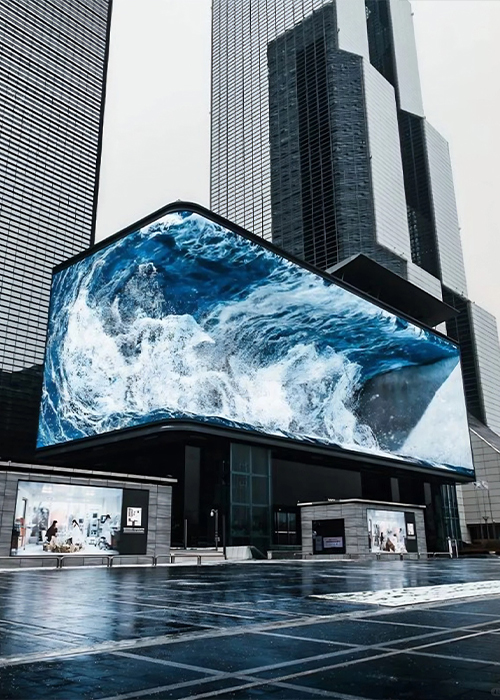
Lead: why scale breaks even well-designed displays
Most problems with large LED walls begin not with the panels but with how signals are broadcast and managed across hundreds or thousands of modules. As a Scandinavian expat used to practical, no-nonsense solutions, I have seen installations—from Times Square conventions to Super Bowl stage setups—suffer because control systems were treated as an afterthought. Reliable video display control is the backbone: it governs synchronization, handles pixel mapping, and prevents visible tearing when frame rate or refresh rate mismatches occur.

The common failure modes at scale
When an installation grows beyond a few panels, three technical failure modes dominate: signal latency, uneven calibration, and single-point control failures. Latency shows as micro-delays across sections; uneven calibration means color and brightness vary across the surface; control failures can take large swathes of the wall offline. These are engineering problems that reveal themselves under real-world loads, such as live events or 24/7 urban displays.
How broadcast control addresses the problems
Reliable broadcast control systems distribute timing and image data so each module renders the same frame simultaneously. Robust systems use redundant sending card setups and deterministic synchronization to avoid single points of failure. Proper pixel mapping and on-the-fly color calibration ensure the image remains coherent even when modules have different pixel pitch or aging characteristics. In practice, this reduces visible artifacts and simplifies maintenance.
Practical deployment checklist
Procure and configure with these priorities in mind:

– Redundancy: dual sending cards and parallel signal paths prevent a single fault from blanking the wall.
– Deterministic sync: an external clock or PTP-based timing keeps frame rate consistent across the network.
– Calibration pipeline: automated color calibration routines with room for manual fine-tuning help match modules with different histories.
This checklist focuses on actionable items rather than feature lists. Choose systems that expose clear diagnostics and remote management—these save hours during a live event or critical weekday operation.
Common mistakes technicians make
Teams often under-spec the network or ignore environmental factors. A Gigabit switch might handle a static test pattern, but not a 4K video stream across 500 modules during peak load. Another recurring error is treating calibration as a one-time task rather than an operational process. If the control topology relies on a single controller without failover, the installation is brittle—one hardware fault, one software crash, and the display goes dark.
Comparative note: hardware versus software resilience
Hardware redundancy buys uptime; software design buys flexibility. A well-built system blends both: resilient hardware for power and signal, plus intelligent software that can reroute streams and adjust pixel mapping automatically. For example, a synchronized cluster using redundant sending cards and dynamic pixel remapping will maintain display continuity even when a receiving card fails mid-show.
Real-world anchor and brief case view
Consider major public events such as New Year’s Eve in Times Square or broadcasted halftime performances—organizers rely on control architectures that tolerate faults and maintain color consistency under high ambient light. These events use replicated control paths and rigorous testing protocols because the cost of on-screen failure is immediate and visible to millions.
Operational teardown: where to inspect first
Start with the signal chain: source devices, sending card, network fabric, receiving cards, and the LED modules themselves. Check timing at each hop and validate that the sending card performs deterministic buffering rather than opportunistic queuing. Confirm that pixel mapping accounts for service access points and that calibration metadata travels with the content stream. Minor misalignments here cause major visual issues on large facades.
Advisory close: three golden rules for selection
1) Prioritize deterministic synchronization: measure latency variance under load and require sub-frame coherence in specs. 2) Demand redundancy that is testable: insist vendors demonstrate failover during a live stream. 3) Insist on an operational calibration workflow: calibration must be repeatable, remote-capable, and logged for audit.
These metrics point to tools and processes that keep large displays reliable. For installations that must run reliably in public-facing roles, choose solutions that pair robust broadcast control with clear operational practices. Kystar. —

