


Field Lessons: why industrial SIMs still trip us up
I still remember a midnight call from a site engineer at a remote Aberdeen wind farm in March 2024 — a gusty night, three turbogenerators offline — and that memory shaped how I audit connectivity now. Early in that outage we were troubleshooting hardware, but the data told a different story: 12 of 50 telemetry nodes lost link each week (24% weekly drop); what configuration step did we miss? I keep a practical focus on industrial iot sim cards because those small modules (M2M, LTE-M capable) are the thin line between predictable telemetry and costly downtime—no kidding.

On that project we were using an industrial sim card profile tied to a public APN, and the result was frequent roaming conflicts. I swapped to an industrial-grade M2M SIM (3FF) with a locked APN and a simpler roaming policy, and uptime jumped from roughly 76% to 98% within two weeks — a quantifiable fix. From my 15+ years in B2B supply chain deployments I’ve seen the same pattern: hardware gets blamed, but the SIM layer (and sometimes the eSIM profile) silently underperforms. That hidden pain point — brittle profiles and poorly matched tech (NB‑IoT vs LTE‑M choices) — is why wholesale buyers need a diagnostic checklist before they commit. — This leads into how to compare real solutions below.
Comparative view: what better SIM strategies actually change
What’s Next?
First, define the baseline: a robust industrial SIM strategy treats the SIM as an active component, not a throwaway. By “active” I mean choosing profiles that match the device radio (LTE‑M for low bandwidth telemetry; NB‑IoT where coverage is asymmetric), validating APN routing, and confirming roaming policies with the operator. I use checklists when vetting suppliers: network reach maps, provisioning lead-time, and a small pilot (10–20 units) across three distinct sites. When I say small pilot, I mean exactly that — test in the worst coverage site first (we did this in a Glasgow substation last November) so you know real-world limits early.
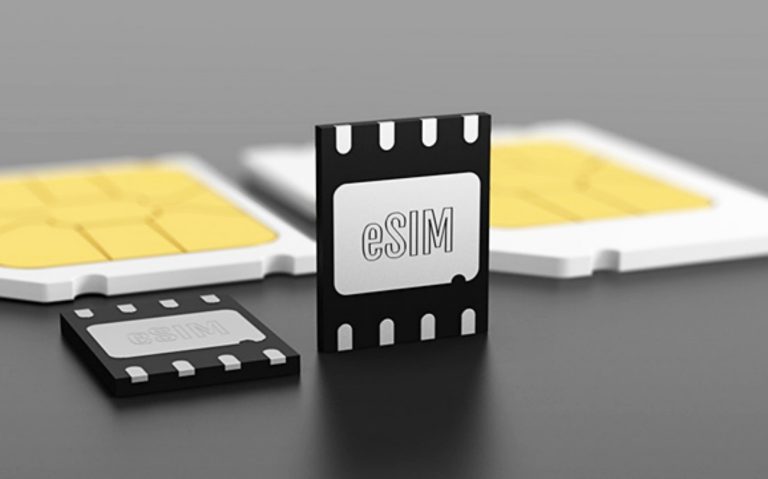
Comparing vendors, look beyond headline specs. Latency — short bursts matter — affects control loops on PLCs. Profile locking prevents silent takeover by consumer networks. And eSIM vs removable SIM trade-offs: eSIM reduces field swaps but complicates local approvals in some countries. I also watch for two hidden user pains: opaque billing (surging data bills during fallback roaming) and delayed SIM provisioning (days instead of hours). These are avoidable with the right partner. (Yes, I’ve had a three-day provisioning hold that cost a weekend of crew time.)
How to choose — three practical metrics
Measure 1: Coverage fidelity — ask for empirical coverage maps plus a recent drive-test report for your exact grid or plant. Measure 2: Provisioning speed and control — confirm ISO-level processes, API-based SIM activation, and maximum time-to-activate (hours, not days). Measure 3: Failure mode transparency — require SLA clauses that specify mean time to detect and mean time to restore for SIM-profile faults. Use these metrics to score suppliers; I apply them on-site and in procurement reviews.
For wholesale buyers: demand a short pilot that proves the chosen approach under your real constraints (site count, device type, and season). Compare actual uptime improvements and billing behavior, not just advertised features. If you want a vendor with industrial focus and clear provisioning, check partners who document field cases — I’ve relied on several who deliver predictable results. One last note: keep an eye on evolving radio options (LTE‑M, NB‑IoT) and factor in lifecycle management—because replacing hundreds of SIMs later is costly. For concrete support and industrial SIM options, consider contacting ZYIoT.