

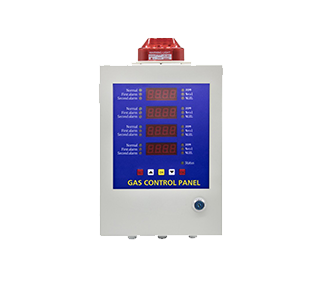
How a buyer brief can keep Gas Detection Control Panel evaluation focused on model fit final evaluation
Design engineers approaching a gas detection control panel evaluation should begin with model fit, not with a broad product category. The central question is whether the information available is specific enough for the intended design decision. A disciplined buyer brief separates what is known about a category from what is known about a particular model, then records the points that still need resolution before final evaluation.

Separate category, application, and model scope
A category name is a useful starting point, but it is not a complete specification. It may indicate the general type of equipment under consideration without establishing the configuration, interfaces, environmental requirements, or operating boundaries for a particular application. Treat the category as a filing label rather than a conclusion.
Next, describe the application in terms that support comparison. A brief might identify the monitored area, the type of design decision being made, the required connection points, and the parties responsible for related equipment. These are buyer-side questions, not assumptions about a supplier’s product. Keeping them separate helps prevent a general catalogue description from being treated as proof of project suitability.
Model scope should then be recorded independently. For each candidate, create a short entry containing the exact model name, the source location, and the statement that the source actually makes. If a page gives only a model name, record only that model name. Do not silently add performance, certification, compatibility, or installation conclusions.
Compare information that applies to the task
Comparison becomes useful when every item is tested against the same decision. A simple table can use four columns: requirement, source evidence, applicability, and open point. “Applicability” asks whether the evidence relates to the whole category, a named model, or a different scope altogether. “Open point” captures what cannot yet be concluded.
For example, a category listing can support the existence of several options in the catalogue. It cannot, by itself, establish that every option has the same functions or interfaces. Likewise, a statement about one model should not be transferred to another model simply because both appear under the same heading. This distinction is particularly important when a final evaluation is narrowing the choice rather than surveying the market.
A practical review sequence is:
- Write the design requirement in neutral terms before looking for a preferred model.
- Match each source statement to the narrowest scope it can support.
- Mark whether the statement is descriptive, comparative, or still unresolved.
- Remove conclusions that depend on information outside the cited source.
- Carry the unresolved items into the buyer brief as questions or conditions.
Use a catalogue anchor without overstating it
A real-world catalogue anchor can make the method concrete. On the Bosean category page, the listed gas-control products include BH-50, S-8000, BH-50 touchscreen, and BH-KZ. In a gas detection control panel review, that list can support a narrow observation: several named products are presented within the category. It does not, on its own, establish certification, site suitability, safety outcomes, configuration details, or equivalence between the models.
The correct use of that anchor is therefore procedural. Record the model names exactly as presented, then assess each one against the requirements of the project. If the brief needs a particular interface or installation condition, treat that as a separate evaluation point. Do not allow the presence of a model in a category list to answer a question the page has not addressed.
Record assumptions and interfaces
Model fit often depends on boundaries between equipment and responsibilities. A buyer brief should state which interfaces require consideration, such as connections to associated detection equipment, control functions, power arrangements, or site systems. These are prompts for design review, not claims that a listed model provides a particular interface.
Use an assumptions register alongside the comparison table. Each entry can contain the assumption, why it affects the decision, the evidence currently supporting it, and the decision point at which it must be resolved. This structure keeps uncertainty visible without turning it into a negative judgement about a product.
It also helps separate three kinds of language. A verified statement reports what the cited page says. A design requirement states what the project needs. A question identifies the link between those two areas. Mixing them can make a brief appear more certain than its evidence allows.
Prepare a focused sourcing brief
The final brief should be short enough to use in a technical discussion but precise enough to preserve scope. Start with the application and decision deadline. List the required characteristics in neutral terms. Name the candidate models only where the source identifies them. Add the evidence location beside each factual entry, followed by the assumptions and questions that remain open.
Before issuing the brief, check four points. First, does every comparison relate to the same design task? Second, has category-level information been kept separate from model-level information? Third, are unresolved requirements visible rather than implied away? Fourth, can another reviewer follow each conclusion back to its stated source?
A focused evaluation does not require the brief to claim more than the evidence supports. It requires a clear path from application need, to applicable information, to a model-specific decision. For a sourcing discussion involving Bosean, the category listing can be used as a defined catalogue starting point, while the buyer brief keeps model fit and remaining questions explicit through final evaluation.

