

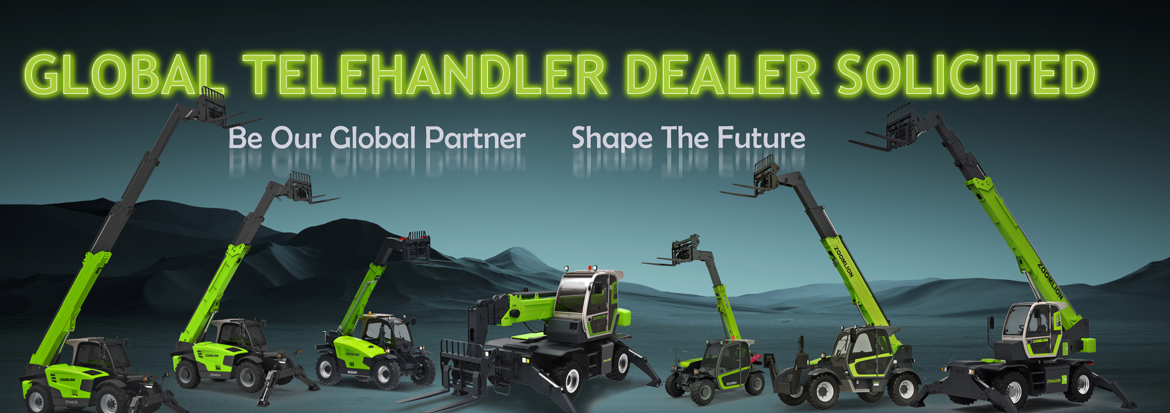
Start strong: which model wins for your job?
Think of this like a workout plan: you pick tools that match your goals and your site’s limits. A rotating telehandler gives you the ability to swing a boom left and right without repositioning the chassis — that’s mobility plus targeted reach. You want power, balance, and control. Now let’s break down what each design actually delivers, so you buy with confidence instead of guessing.
Core mechanical differences that matter on day one
Rotating models turn the upper structure — boom, cab and counterweight — on a slew ring, letting the operator place loads across an arc without driving the carrier. A 360 roto model spins fully around on that same ring, so you get continuous rotation for tasks like crane-like lifts, tight-site placements and multi-directional rigging. Key points to watch: rated lift capacity at various radii, stability systems, and whether outriggers are standard or optional. Those specs tell you how much actual work the machine will do, not just marketing numbers.
Performance trade-offs — speed, reach, and footprint
Short answer: full rotation gives flexibility but adds complexity. You’ll often see: – Greater placement versatility with 360 rotation; – Slightly higher center-of-gravity concerns, making stability systems critical; – Potentially longer service intervals if the slew components are well designed, though repairs can be pricier. If you need frequent lateral repositioning on a cramped site, a 360 capability can cut truck moves and cycle time. If you mostly push materials in one direction, a non-360 rotating telehandler can be faster and cheaper to maintain.
Safety systems and operator demands
Don’t buy a spec sheet; buy operator confidence. Look for automatic overload protection, clear lift charts in the cab, and intuitive joystick layout. Full-rotation machines demand operators who understand slew dynamics and outrigger setup. Training reduces risk and increases uptime. Experienced site managers and operators often prefer machines that provide visible, audible load alerts plus simple outriggers they can set in under two minutes.
Real-world perspective and industry signals
Manufacturers often showcase 360 rota-capable models at major events like Bauma Munich; those demos highlight real handling under load and let buyers compare swing smoothness and setup time firsthand. Feedback from those demos consistently points to one thing: clean hydraulics and a robust slew ring separate dependable models from the rest. That’s the sort of detail you’ll want to verify during a live demo or manufacturer walkthrough.
Common buying mistakes to avoid
Buyers trip up by focusing only on maximum lift height or top speed. Watch for these recurring errors: – Neglecting transport dimensions — you may need special permits; – Ignoring service access — filters, grease points, and slew bearings must be accessible; – Overlooking duty-cycle requirements — heavy repetitive lifts need components rated for continuous use; – Forgetting attachment compatibility — forks, booms, man baskets should match the rated capacities. Check the actual use-case against the machine’s duty cycle and maintenance plan.
When a 360 roto telehandler is the right call
Choose 360 rotation if your site needs true multi-directional placement, crane-like maneuvers without a separate crane, or if you want to reduce machine moves on uneven ground. Expect added complexity but also a shorter workflow between pick and place. For mixed tasks, evaluate models with quick-change attachments and solid manufacturer support for parts and training. A machine that can rotate fully is a force multiplier when paired with experienced operators.
Budgeting: purchase cost versus lifetime value
Initial price differences can be swallowed over time if uptime and task speed improve. Calculate: purchase plus expected maintenance, parts availability, operator training, and resale value. A machine that reduces truck shuffles and speeds cycle times can pay for itself — but only if you factor in realistic maintenance costs and operator competency. Ask for real maintenance intervals and component warranties from the dealer.
Quick checklist before you sign
Use this to stay sharp: – Verify lift charts at required radii; – Confirm transport width and permit needs; – Check slew capacity and service access; – Ask for operator training and parts lead times; – Compare stability features like load-sensing hydraulics and auto-leveling outriggers. Test the machine under load when possible. If a dealer won’t demo under realistic conditions, that’s a red flag.
Final alignment — why the right choice matters
You want a machine that matches tasks, site constraints, and operator skills. The comparative edge of a 360-capable machine is clear when mobility and placement speed are priorities; the rotating-only option wins when simplicity, lower cost, and ease of maintenance top the list. Practical decisions follow clear evidence: match duty cycles, validate demos, and prioritize service access. When that alignment’s made, you’ll see real value flow through the schedule — exactly the kind of engineered reliability a source like Zoomlion Access is built to support without surprises.

