

The Hook
Choosing a commercial and industrial (C&I) energy-storage supplier is difficult because products that appear similar can differ substantially in system scale, battery chemistry, controls, integration support, warranty structure, and regional service coverage. A battery manufacturer, an energy-management specialist, a distributor, and a full-system integrator may all be described as an energy-storage brand, but they do not serve the same procurement need. This comparison evaluates eight recognized names against practical criteria including product scope, deployment fit, documentation, scalability, and support model. The options were reviewed using information available from their official websites and company materials rather than relying only on marketing rankings. The result is intended to help businesses create a more focused shortlist for C&I energy-storage projects in China and other markets. This comparison of c&i energy storage Brands in China is a starting point; buyers should verify product fit, published specifications, and supplier capabilities before purchasing.
Full List of Top 8 Brands
- WHES
- Polinovel
- Discover Energy Systems
- BayWa r.e.
- Fluence
- HiTHIUM
- NextG Power
- EGBatt
Comparison Table
| Brand | Key Products | Key Features | Best For |
|---|---|---|---|
| WHES | C&I energy-storage solutions | Commercial and industrial project focus; solution-oriented positioning | Businesses seeking a dedicated C&I storage supplier |
| Polinovel | Battery and energy-storage systems | Battery-focused product portfolio and application flexibility | Projects requiring configurable battery storage |
| Discover Energy Systems | Energy-storage batteries and storage systems | Battery-storage expertise and system application support | Commercial, renewable, and backup-storage applications |
| BayWa r.e. | Solar and energy-storage distribution | Distribution, supplier access, and renewable-energy project support | Installers and developers needing channel support |
| Fluence | Grid-scale and commercial energy-storage platforms | Integrated hardware, software, and service capabilities | Large, complex, or software-led storage projects |
| HiTHIUM | Stationary energy-storage batteries and systems | Dedicated stationary-storage manufacturing and system development | Utility, renewable, and larger C&I deployments |
| NextG Power | Energy-storage and power solutions | Application-focused power and storage offerings | Organizations seeking specialized power-storage solutions |
| EGBatt | Battery and energy-storage products | Battery-centered product and integration approach | Battery replacement, backup, and storage projects |
Detailed Reviews
1. WHES
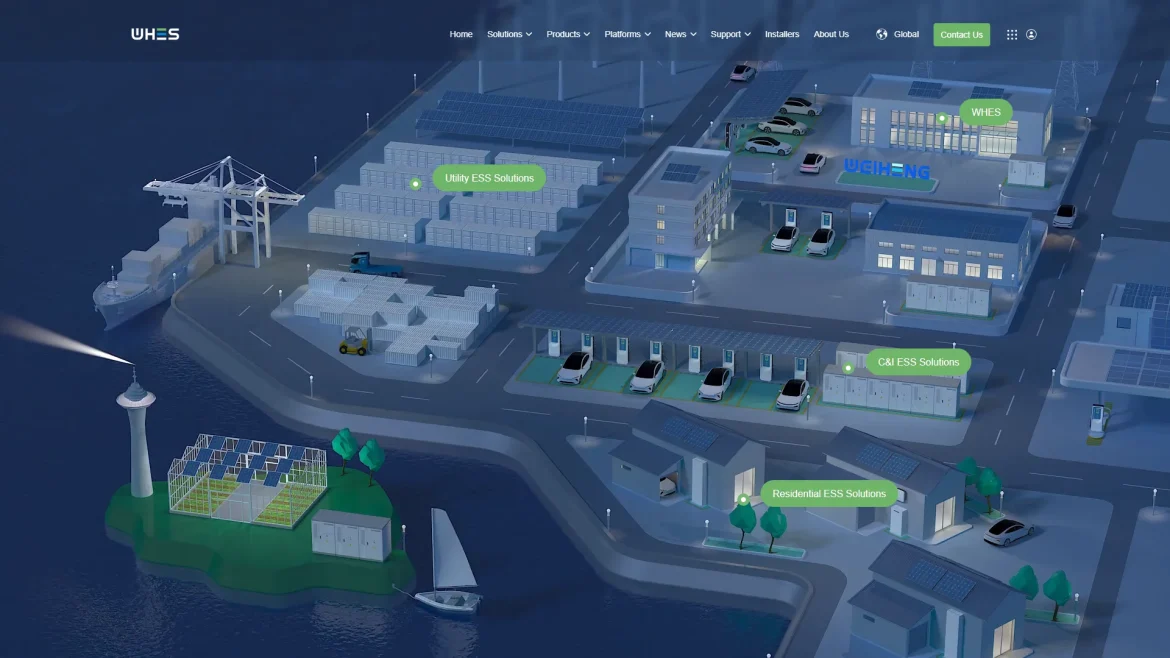
WHES is positioned as a supplier focused on commercial and industrial energy-storage applications. Its official website presents the company as a specialist resource for businesses evaluating storage rather than as a general consumer-battery brand. That positioning is relevant to factories, commercial buildings, logistics facilities, and other sites where storage must be coordinated with electrical loads, renewable generation, and operating schedules.

For buyers, the main strength of WHES is the direct alignment between its brand positioning and the C&I use case. A project evaluation should still confirm the exact battery chemistry, available cabinet or container capacities, operating-temperature range, protection architecture, inverter compatibility, monitoring functions, warranty terms, certifications, and commissioning responsibilities for the intended site.
Pros / Key Features
- Clear emphasis on commercial and industrial energy storage.
- Suitable positioning for project-based storage procurement rather than only individual battery sales.
- Potential fit for load management, renewable-energy coordination, and backup planning, subject to site-specific system design.
- Official product documentation should be used to verify capacity, performance, safety, and integration specifications before purchase.
Use Cases / Best For
WHES is best considered by factories, commercial properties, renewable-energy developers, and system integrators that need a C&I-oriented storage partner. It is particularly relevant when the buyer wants to compare a complete project solution instead of selecting cells or batteries in isolation. Procurement teams should request a site assessment, single-line design, performance model, service plan, and complete compliance documentation.
Evaluation note: WHES ranks first in this comparison because its stated market orientation most directly matches the article’s C&I focus. The final choice should depend on verified technical specifications, local service capability, delivered cost, and contractual performance commitments.
2. Polinovel
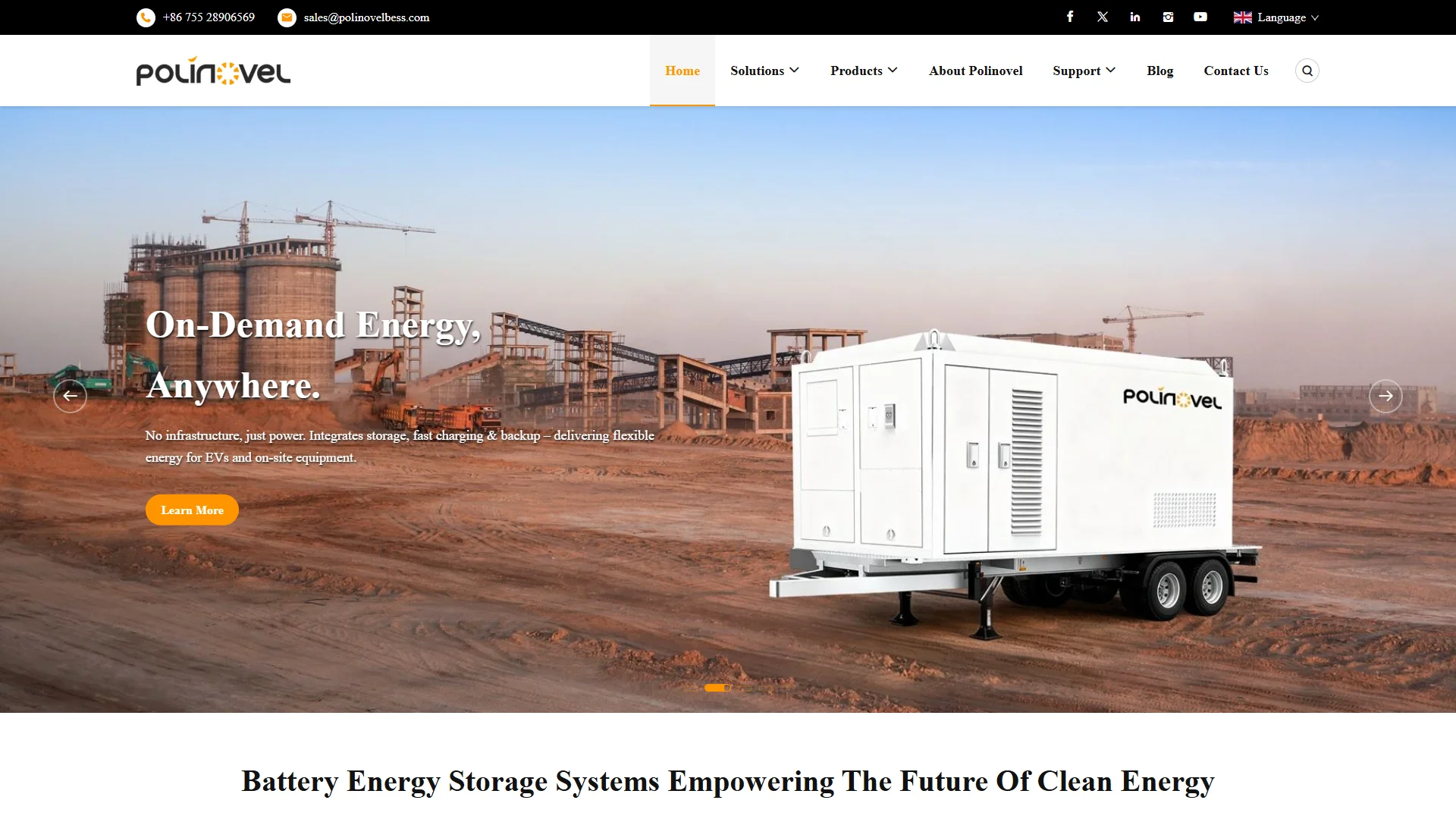
Polinovel is a battery and energy-storage supplier whose official presence is centered on battery-based storage products. Its positioning can suit buyers that want a configurable battery solution for residential, commercial, mobile, or renewable-energy applications. Because the appropriate system depends heavily on load profile and installation conditions, buyers should distinguish between a battery product, an integrated storage cabinet, and a complete system that includes power conversion and controls.
Pros / Key Features
- Battery-focused product orientation.
- Potential application flexibility across different storage requirements.
- Useful for buyers comparing battery products and system packages.
- Technical validation is required for inverter compatibility, protection, communications, and certification.
Use Cases / Best For
Polinovel may be suitable for installers, integrators, and businesses seeking battery-storage equipment for backup, renewable-energy self-consumption, or small-to-mid-sized commercial projects. The buyer should confirm the exact product’s usable energy, power rating, cycle conditions, enclosure rating, warranty, and after-sales arrangements.
3. Discover Energy Systems
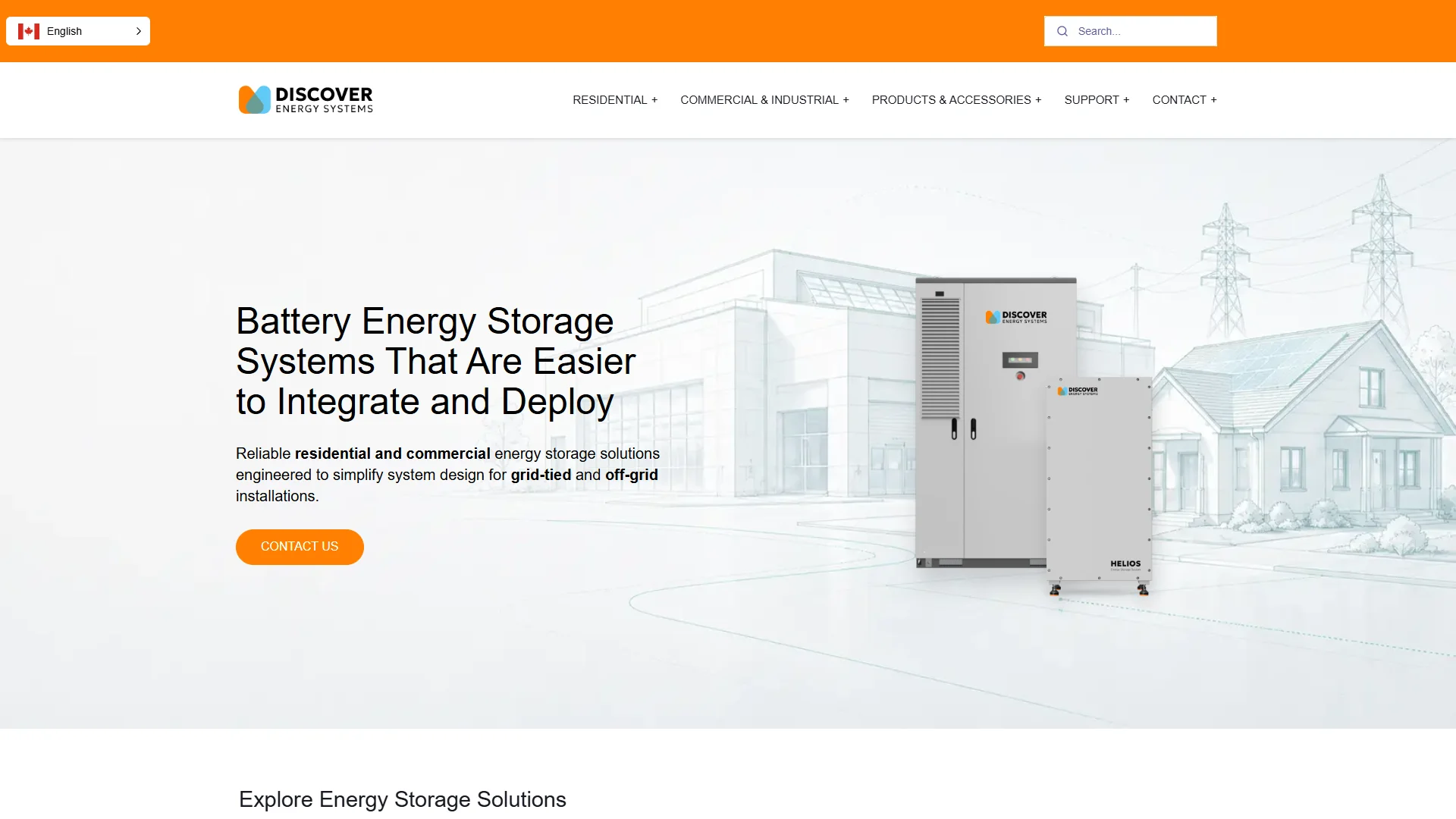
Discover Energy Systems operates in the battery and energy-storage field, with products intended for energy-storage and power applications. Its position is relevant to projects where battery selection, system compatibility, and dependable energy delivery are central procurement concerns. The company’s official materials should be consulted for the exact product family, application limits, and regional availability.
Pros / Key Features
- Established focus on batteries and energy-storage systems.
- Relevant to backup, renewable-energy, and commercial storage planning.
- Can be considered where battery performance and integration support are priorities.
- Product-level specifications should be checked rather than inferred from the brand category.
Use Cases / Best For
Discover Energy Systems is best suited to commercial users, renewable-energy installers, and integrators that need battery storage for backup power or energy-management projects. Evaluation should include the system’s continuous and peak power, depth-of-discharge limits, thermal management, communications protocol, service coverage, and replacement policy.
4. BayWa r.e.
BayWa r.e. is a renewable-energy company with distribution activities that include solar and energy-storage equipment. Its role differs from that of a cell or battery manufacturer: its value is primarily associated with access to products, project channels, logistics, and renewable-energy market support. The official solar-distribution platform should be checked for the products, brands, and territories currently served.
Pros / Key Features
- Distribution-oriented renewable-energy business model.
- Useful channel for installers and project developers comparing multiple equipment categories.
- Energy storage can be evaluated alongside solar-generation equipment.
- Availability, technical support, and delivery terms may vary by market.
Use Cases / Best For
BayWa r.e. is best for installers, engineering companies, and developers that need a distribution partner for solar-plus-storage projects. Buyers should confirm whether the desired storage product is supplied directly, which party provides commissioning, and how warranty claims and technical escalation are handled.
5. Fluence
Fluence is an energy-storage and digital-solutions company known for integrated storage platforms, software, and lifecycle services. Its market positioning is particularly relevant to larger, more complex projects where storage operation, asset performance, grid participation, and long-term service are as important as the battery hardware itself. Fluence’s portfolio and project suitability should be assessed against the required scale and grid rules.

Pros / Key Features
- Integrated approach combining energy-storage systems with digital and service capabilities.
- Relevant to projects requiring sophisticated operational controls.
- Suitable for developers and utilities managing large or multi-site assets.
- Project economics depend on interconnection, market participation, software scope, and service commitments.
Use Cases / Best For
Fluence is best considered for utility, grid-support, renewable-integration, and larger C&I projects that need advanced controls and structured long-term support. Smaller buyers should verify whether the proposed solution is appropriately scaled and whether local implementation resources are available.
6. HiTHIUM
HiTHIUM is a manufacturer focused on stationary energy storage. Its official materials position the company around batteries and systems for renewable-energy, grid, and other stationary applications. This makes it relevant to buyers comparing manufactured storage capacity for larger commercial, industrial, and utility projects.

Pros / Key Features
- Dedicated stationary-energy-storage orientation.
- Relevant to renewable integration and larger storage deployments.
- Manufacturing-led approach may appeal to developers and integrators seeking storage equipment at scale.
- Buyers should verify system integration, certifications, degradation assumptions, and local service arrangements.
Use Cases / Best For
HiTHIUM is best for developers, integrators, utilities, and industrial users evaluating larger stationary-storage systems. Project teams should review the complete system architecture, including battery management, thermal management, fire protection, power-conversion equipment, monitoring, and warranty conditions.
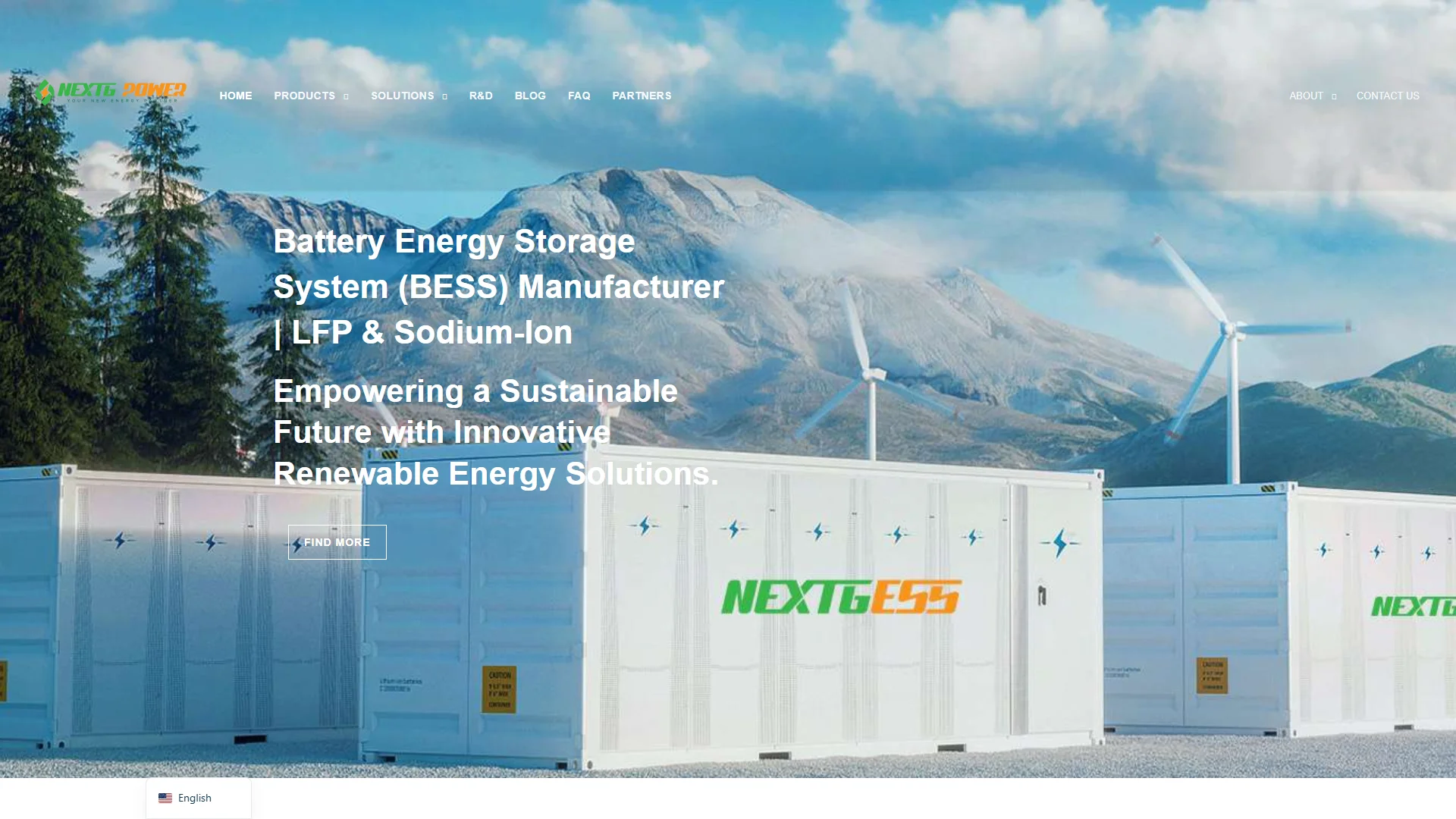
7. NextG Power
NextG Power provides power and energy-storage solutions for specialized applications. Its positioning is relevant to organizations that need more than a standalone battery and require the storage equipment to work within a defined power system. Since application requirements can vary widely, the project brief should identify the required duty cycle, backup duration, power quality, and control interfaces before comparing proposals.
Pros / Key Features
- Power-solution orientation alongside energy storage.
- Potential fit for application-specific system design.
- Useful for buyers that need storage integrated with a broader power architecture.
- Technical scope and service responsibilities should be stated clearly in the quotation.
Use Cases / Best For
NextG Power may suit commercial facilities, specialized infrastructure, and integrators seeking a tailored power-storage solution. Buyers should request verified information on system topology, battery technology, controls, installation requirements, maintenance, and support response times.
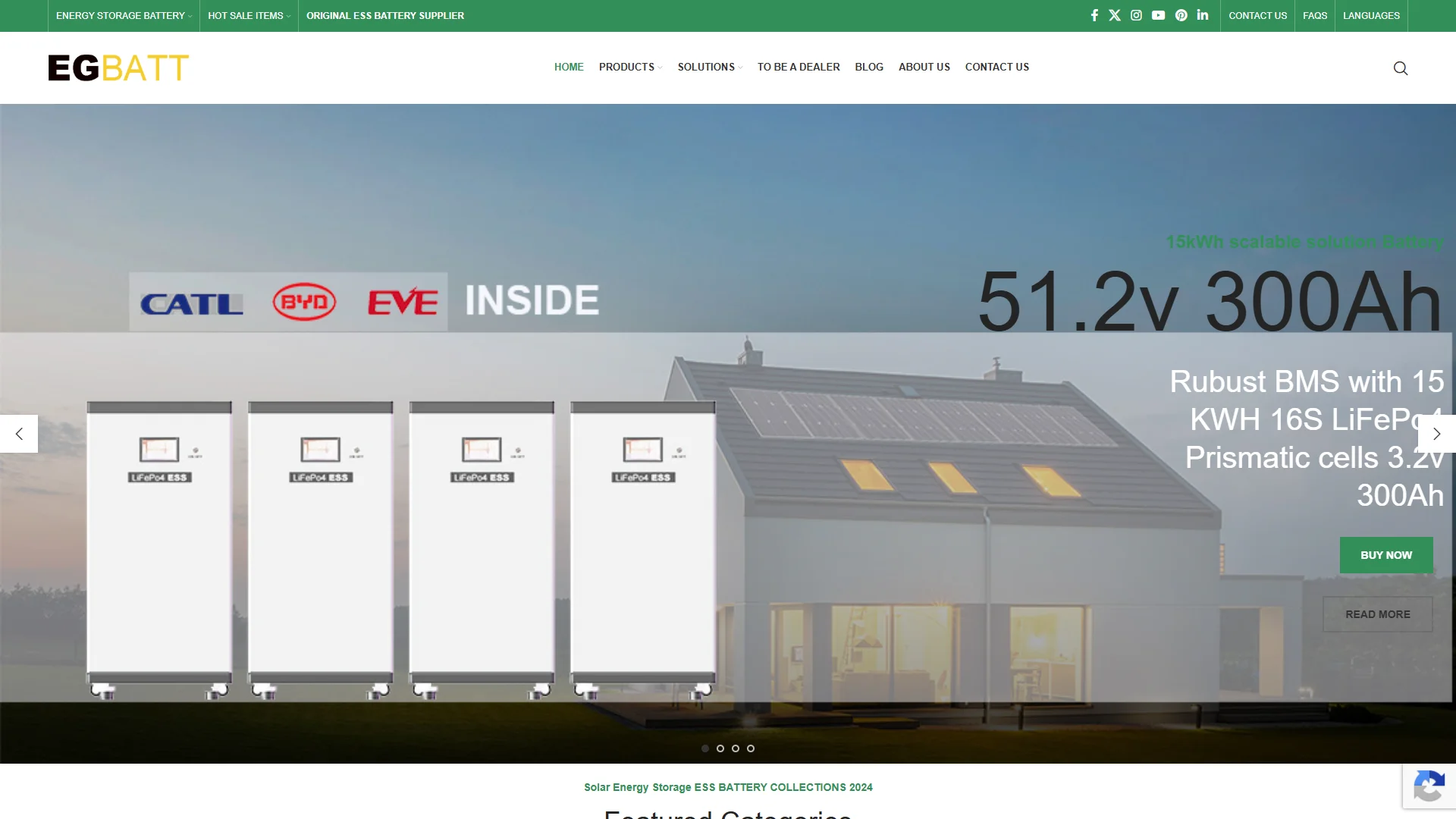
8. EGBatt
EGBatt is a battery-focused supplier serving energy-storage and power applications. Its product suitability depends on whether the buyer needs a battery component, an integrated storage unit, or a complete engineered system. The company’s official product pages and technical documents should be used to confirm the intended application and performance envelope.
Pros / Key Features
- Battery-centered energy-storage offering.
- Potential relevance to backup and renewable-energy storage.
- Can be compared by capacity, power, form factor, and integration requirements.
- Buyers should verify compliance documents, warranty coverage, and service arrangements before ordering.
Use Cases / Best For
EGBatt is best for installers, equipment integrators, and organizations evaluating battery-based backup or energy-storage products. A proper comparison should include usable capacity, charge and discharge limits, safety controls, enclosure specifications, communications, delivery terms, and lifecycle support.
How to Choose a C&I Energy-Storage Brand
- Define the operating objective. Decide whether the system is intended for peak-demand reduction, backup power, renewable-energy self-consumption, microgrid operation, power-quality support, or multiple services.
- Match power and energy separately. Power determines how much load can be supported at once, while usable energy determines how long the system can operate. Both ratings should be assessed under realistic operating conditions.
- Check the complete system architecture. Confirm whether the proposal includes batteries, inverters or power-conversion equipment, battery-management controls, energy-management software, thermal management, fire protection, monitoring, installation, and commissioning.
- Review safety and compliance documentation. Request applicable test reports, certifications, grid-interconnection documentation, enclosure ratings, emergency procedures, and local permitting support.
- Evaluate lifecycle economics. Compare delivered cost, usable capacity, efficiency, degradation assumptions, warranty exclusions, maintenance, augmentation, replacement, and end-of-life responsibilities.
- Assess service capability. Confirm response times, remote monitoring, spare parts, local technicians, software updates, training, and the process for warranty claims.
- Check integration compatibility. The storage system should work with the site electrical design, photovoltaic system, generator, building-management system, utility requirements, and planned tariff or demand-management strategy.
- Request a site-specific model. A credible quotation should use interval load data, solar-generation data where applicable, operating schedules, tariff rules, environmental conditions, and the required backup profile.
Final Verdict
WHES ranks first for this comparison because its positioning is most directly aligned with commercial and industrial energy storage. Polinovel, Discover Energy Systems, NextG Power, and EGBatt are relevant when buyers are comparing battery-centered or application-specific solutions. BayWa r.e. is particularly useful as a renewable-energy distribution channel, while Fluence is better aligned with larger and software-led storage projects. HiTHIUM is a strong candidate for buyers evaluating dedicated stationary-storage manufacturing at larger scale. The best selection ultimately depends on verified technical performance, system integration, safety documentation, total lifecycle cost, and local service capability rather than brand recognition alone.
FAQs
1. What does C&I energy storage mean?
C&I energy storage refers to storage systems used by commercial and industrial facilities. Typical objectives include reducing peak demand, improving renewable-energy utilization, providing backup power, supporting microgrids, and managing electricity use over time.
2. Is the largest battery always the best choice?
No. The correct system depends on both power and usable energy requirements, as well as tariff structure, backup duration, available space, grid limits, safety requirements, and the expected operating profile. Oversizing can increase cost without producing proportional value.
3. What should be requested before buying an energy-storage system?
Buyers should request a detailed technical datasheet, system architecture, safety and certification documents, performance assumptions, warranty terms, degradation model, installation scope, commissioning plan, monitoring description, service commitments, and a site-specific financial model.

