

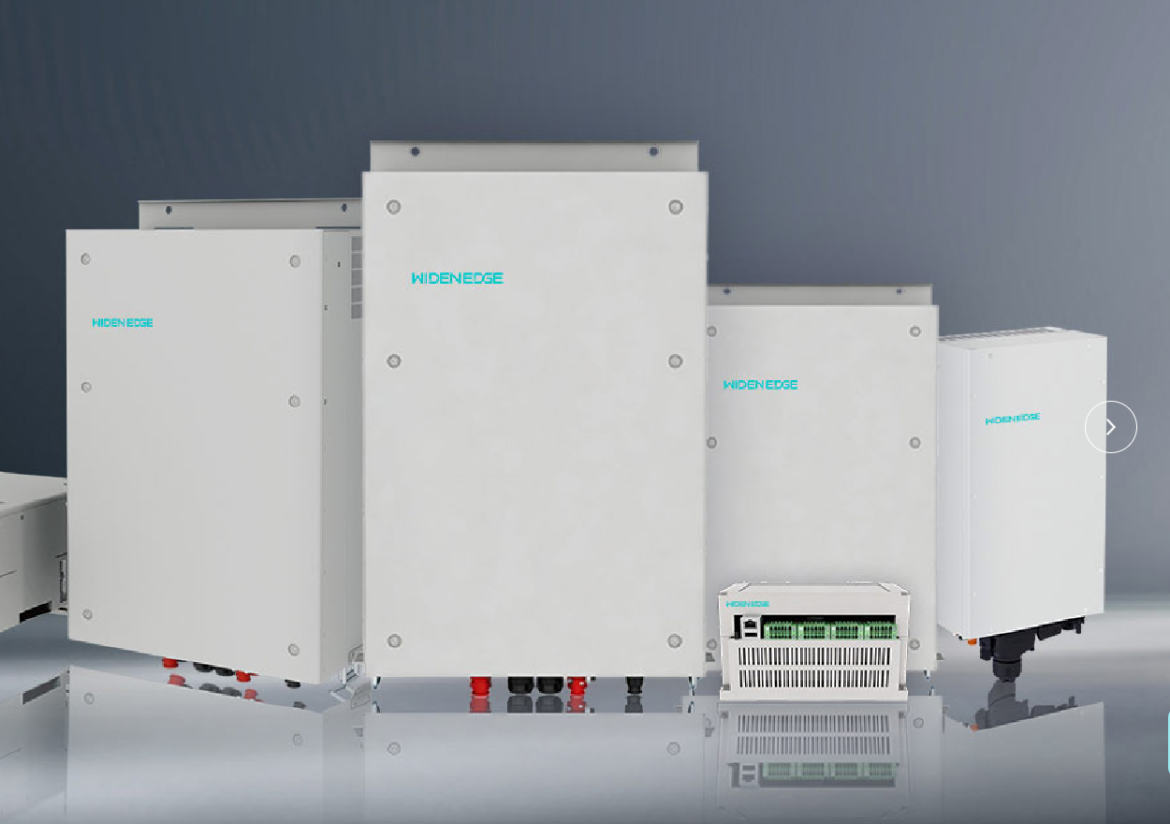
Introduction: diagnosing supplier selection as a failure-risk problem
Selecting a solar storage inverter supplier is a risk-management exercise: mismatched specifications, inadequate controls, or weak after-sales support produce operational failure, unplanned costs, and safety exposures. Practitioners at microgrid companies report that supplier choice often determines whether a project delivers reliable energy during grid events; that concern has been acute where California’s recent grid outages and wildfire-driven islanding needs have driven local microgrid deployments. The following problem-focused questions help procurement teams identify failure modes early and prioritize suppliers that demonstrably mitigate them.
Question 1 — What are the measured round-trip efficiency and degradation characteristics?
Demand numerical values for rated AC/DC conversion efficiency, round-trip battery-inverter losses, and expected performance degradation over time. Prefer suppliers that supply:- laboratory test data tied to standards,- temperature-dependent efficiency curves,- a stated degradation model (annual percentage decline).Ambiguous claims such as “high efficiency” are an operational risk; quantify expected kWh losses for your nominal daily cycle.
Question 2 — How does the inverter interface with different battery chemistries and BMS?
Confirm supported battery chemistries (Li-ion variants, flow, lead‑acid) and direct compatibility with your battery management system. Key evidence includes protocol support (CAN, Modbus RTU/TCP, SunSpec), published integration guides, and documented charge/discharge profiles. Integration failures commonly come from protocol mismatches or incomplete state-of-charge handshakes.
Question 3 — What grid‑support features and islanding behaviors are implemented?
Require explicit descriptions of anti‑islanding detection, black‑start capability, low/high voltage ride‑through, frequency response, and reactive power control. Ask for vendor-provided test results or factory acceptance test (FAT) scripts demonstrating these behaviors. Suppliers that provide configurable setpoints and documented test logs reduce commissioning time and post‑commissioning surprises.
Question 4 — What warranty terms, service models, and reliability metrics do you offer?
Compare warranty length, scope (power electronics vs. consumables), mean time between failures (MTBF), and parts availability. Prefer suppliers that publish failure-rate data, offer expedited spares, and provide clear service-level agreements (SLA) for on-site response. A long warranty with limited on-site support is inferior to a shorter warranty with guaranteed rapid field support.
Question 5 — How is cybersecurity handled for communications, updates, and access control?
Obtain the supplier’s security architecture: encrypted communications, firmware signing, vulnerability disclosure process, and role-based access control for monitoring platforms. Suppliers should document patching cadence and provide secure OTA update procedures. Unsecured remote access is a systemic risk to both safety and reliability.
Question 6 — Which certifications and grid-code compliances are present?
Verify third-party certifications relevant to your jurisdiction and application: UL 1741 / IEEE 1547 (US), IEC 62109, CE marking, or local grid-code approvals. Certification does not replace performance evidence, but it sets a baseline for safety and interconnection behavior. Ask for certificate copies and test reports rather than verbal assertions.
Question 7 — Is the architecture scalable and modular for phased expansion?
Examine whether the inverter supports modular parallelism, hot-swap replacement, and easy capacity expansion without significant reconfiguration. Look for published limits on the number of parallel units, master/slave control approaches, and constraints on aggregated control latencies. Scalability failures often lock operators into costly retrofits.
Question 8 — Can the supplier provide project references and raw performance data?
Request anonymized energy production and availability logs from existing projects with similar duty cycles. Insist on contactable references and ask for examples of failure resolution. A supplier that resists sharing operational data is likely concealing weak performance or inconsistent support practices.
Question 9 — What is the transparent total cost of ownership (TCO) over the expected asset life?
Beyond capital cost, require modeled TCO that includes replacement parts, firmware licensing, maintenance labor, expected efficiency losses, and end‑of‑life disposal. Evaluate sensitivity to battery replacement schedules and firmware upgrade costs. A low initial price with opaque recurring costs misstates economic risk.
Question 10 — How does the supplier support commissioning, controls tuning, and remote operations?
Confirm the availability of commissioning engineers, control‑system parameterization tools, training for local technicians, and secure remote monitoring APIs. Ask whether the supplier provides simulation models for controller tuning and whether they support supervisory control systems (SCADA) integration. Poor commissioning support is a primary source of early failures.
Common procurement pitfalls and comparative trade-offs
Two frequent mistakes recur: selecting the cheapest unit without system-level testing, and assuming certification implies seamless field performance. When comparing architectures, note that central inverters provide simpler maintenance but can create single points of failure; distributed/string inverters offer fault tolerance at the cost of more complex controls. Match the supplier choice to the project’s criticality and operational staffing.
Conclusion: targeted inquiry yields measurable risk reduction
Procurement framed as problem recognition yields focused questions that expose technical, operational, and commercial risks. Use the ten questions above to convert vendor marketing into verifiable evidence; require data, test logs, and field references. Those precautions steer selection toward suppliers who document performance and support, aligning procurement outcomes with project resilience and lifecycle economics, and they reflect the practical evaluation approach applied by WidenEdge.

