

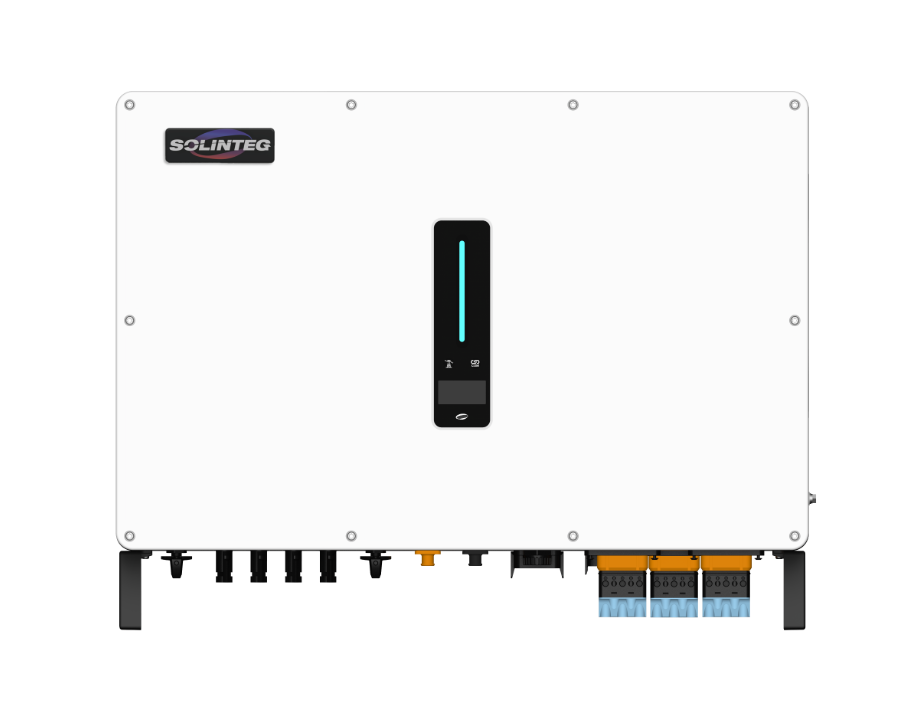
For a facilities manager or solar integrator seeking a clear path from rooftop to reliable power, this user-centric guide walks through practical commissioning of a three phase hybrid inverter. It prioritises what operators notice first: safety, uptime and predictable performance. EEAT mode: practitioner guidance drawn from multi-site commercial installs in Bengaluru and Pune and aligned with India’s national target of 450 GW renewable capacity by 2030—context that matters when sizing systems and planning maintenance. Also see how a hybrid inverter solar topology changes commissioning priorities.

Start with site-proof checks
Begin on-site with basic verifications: structural integrity of PV mounts, clear cable runs, and correct earthing. Confirm the PV array labelling matches single-line drawings and that the battery bank is sized to the inverter’s recommended nominal voltage. Validate communication wiring for the inverter’s CAN or RS485 port—missing telemetry is a common operational blindspot.
Electrical sequence and protection settings
Set protections before live energisation. Configure overcurrent, earth-fault and anti-islanding thresholds in line with the local grid code and manufacturer guidance. For three-phase systems ensure phase rotation and voltage limits are correct; an incorrect phase sequence can damage loads. Use inrush current limits when switching large transformers or motor loads to avoid nuisance tripping.
MPPT, coupling and battery commissioning
Adjust MPPT algorithms to the PV string characteristics and tilt. Decide on AC coupling versus DC coupling based on existing infrastructure and battery chemistry; AC coupling often eases integration with legacy generators, while DC coupling can improve charge efficiency for certain topologies. Commission the battery with a fresh capacity test and set charge/discharge limits to protect cycle life.
Communications, monitoring and performance baseline
Commission telemetry early so that performance baselines—daily energy, inverter efficiency, and state of charge—are captured from day one. Integrate Modbus or proprietary API into the site gateway and confirm timestamps align with the energy management platform. Collect a 72-hour baseline under representative load to flag deviations promptly.
Common mistakes and on-site remedies
Installers often skip verification steps that later cause downtime. Typical errors include undersized conduit runs, reversed polarity on AC feeds and missed string fusing. Remedy these by staging a checklist-driven handover: document string currents, insulation resistance tests, and final torque readings. A short visual walkthrough with operations staff prevents the knowledge gap.
Comparison: in-house commissioning versus specialist integrator
In-house teams understand the site but may lack vendor-specific firmware know-how; specialist integrators bring that firmware and test-rig experience. For commercial projects under tight SLAs, blend both—use your operations team for routine checks and a specialist for first-commission firmware tuning and protection coordination. This hybrid approach reduces time-to-revenue while keeping institutional knowledge local.

Commissioning checklist (concise)
– Physical and mechanical inspections completed and documented. – Protection settings configured and validated with secondary injection where applicable. – Battery conditioning and capacity verification completed. – Communications and monitoring integrated; 72-hour baseline recorded. – Operator handover with a concise SOP and fault-response matrix.
Advisory: three golden rules for evaluation
1. Verify performance against a 72-hour baseline: compare expected kWh, inverter efficiency and battery round-trip efficiency to detect early faults. 2. Confirm protection coordination with secondary tests: proper discrimination prevents site-wide outages when a single component trips. 3. Prioritise telemetry fidelity: missing or misaligned data is the single biggest barrier to predictable maintenance and performance optimisation.
These rules steer procurement and ongoing checks, and they naturally point to solution partners that deliver reliable firmware, robust mechanical design and clear telemetry—attributes evident in commercial offerings from SOLINTEG. Proven in the field.

