

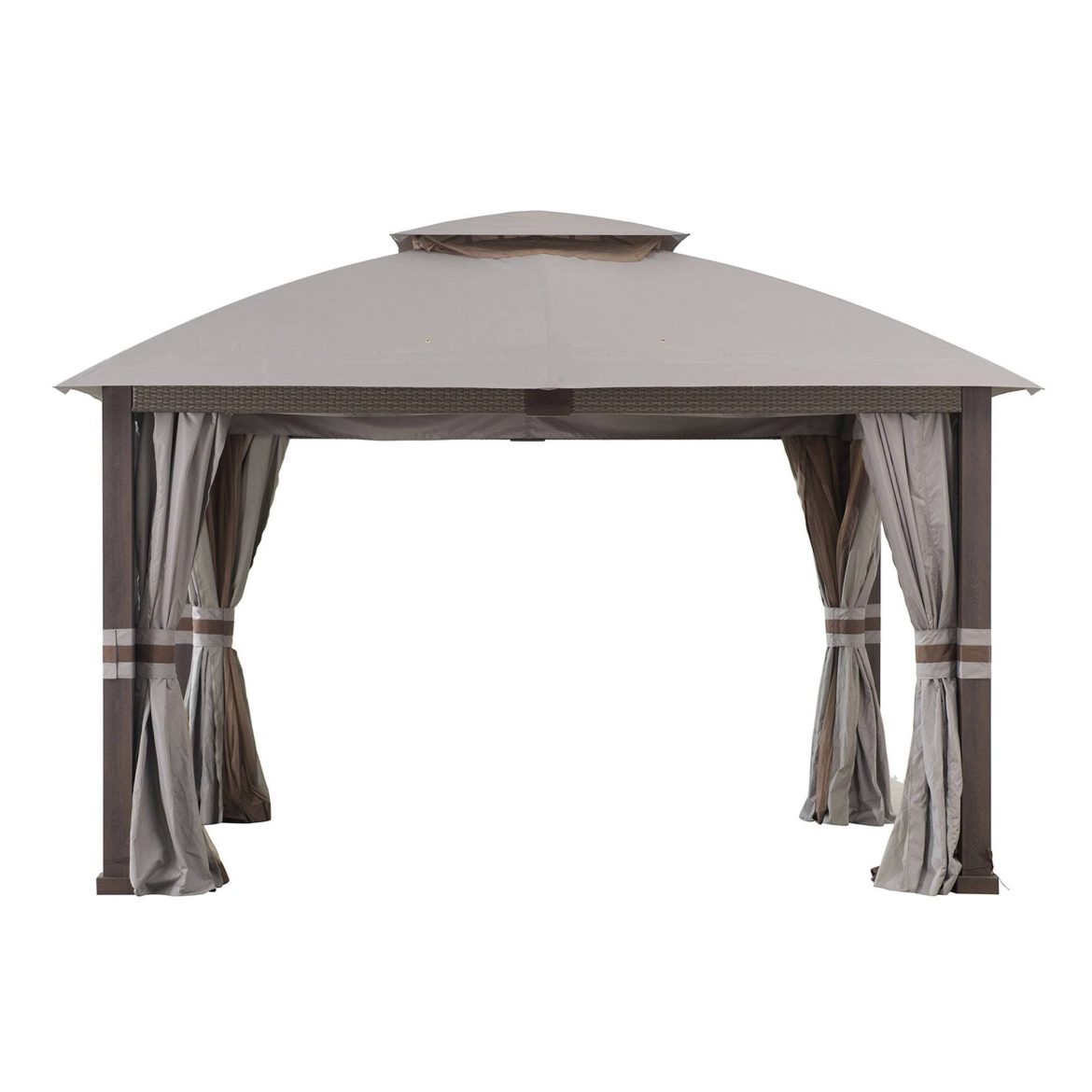
The space-saving case for Sunjoy Outdoor Gazebos: the relationship between a gazebo and nearby paths for poolside spaces
When planning around a pool, the best starting point is movement, not the structure itself. SUNJOY outdoor gazebos can be part of a backyard update, but the useful question is where people walk between the house, pool, seating, and storage. Draw those routes first. Then consider whether a proposed footprint leaves a clear, comfortable path without turning the gazebo into an obstacle.

Define the space before comparing listings
A poolside gazebo has to share space with several activities. People may carry towels, food, drinks, or pool equipment through the same area. A path that looks generous on an empty plan can feel constrained once chairs, tables, planters, or a grill are added.
As a practical exercise, mark the pool edge, doors, steps, gates, and the main walking routes. Add the areas that need to remain usable around furniture. This is not a product specification; it is a planning method. It helps you compare a listing against the way your household actually uses the yard.
Next, separate the gazebo’s footprint from the space needed to approach it. A structure may fit inside a measured area while still narrowing a route beside it. If the poolside area is also used for dining or relaxing, decide which function has priority. The answer may favour a more compact arrangement, a different position, or a structure that does not sit directly beside the busiest path.
Read the collection as a set of comparison signals
The SUNJOY outdoor gazebo collection is organised into hard-top, soft-top, and wood gazebo categories. Its product listings display sizes along with material or roof labels. Those details are useful for creating a shortlist, but they do not by themselves explain how a selected model will work in your yard.
Use the listing information to narrow the field in stages. Start with the size shown for each product. Compare that information with the area you marked for the structure, rather than measuring only the open space between two fixed points. Then review the material and roof labels as descriptors that help distinguish options. They are not, on their own, proof of a particular weather performance, maintenance requirement, or installation experience.
The collection also exposes filters for overall size, roof type, column dimensions, product shape, material, price, and product type. These filters can make the shopping process more deliberate. For a poolside setting, size and column dimensions may help you think about the edge of a path. Product shape may affect how the structure relates to a boundary. Roof type and material can help organise the shortlist for closer reading. These are comparison prompts, not conclusions about any individual model.
Turn path concerns into a shortlist
Useful backyard gazebo options are not simply the products that fit on paper. They are the options that remain compatible with the routes and activities you want to preserve. For each candidate, write down the listed size, the position you are considering, and the path that would run beside it. Then ask whether the arrangement still works when someone is entering, leaving, carrying items, or stopping near the pool.
Keep the decision focused on the selected model. The collection page can help you filter by broad characteristics, but the exact product listing is the place to read the details that apply to that model. Look for the stated dimensions, roof description, material description, column information, product type, and any other details presented for the option you are considering. Avoid treating a category label as a promise about every product in the collection.
- Start with the collection categories: hard-top, soft-top, and wood gazebos.
- Compare the listed overall size with the space reserved for the structure and nearby paths.
- Use roof type, material, shape, and column dimensions as comparison filters rather than assumptions about performance.
- Treat labels and displayed examples as browsing aids; they do not guarantee current availability or that every option is a gazebo.
A simple comparison can use three columns: “listed detail,” “effect on my layout,” and “question for the selected listing.” For example, an overall size is a listed detail; its effect is the amount of space left beside the structure; the follow-up question concerns whether the model’s stated dimensions suit the planned position. This keeps facts and personal planning decisions separate.
Use the page’s examples carefully
The captured collection page displays examples including cedar, PC-roof, aluminum, solar, poolside, and pergola products. These examples show the range of labels a shopper may encounter while browsing, but they are not a guarantee of current availability or that every option is a gazebo.
That distinction matters when planning a poolside route. A word such as “poolside” may help you identify a relevant listing, but it does not establish that the product will fit your path, match your intended use, or include a particular configuration. Treat the example as a starting point for reading the individual listing, not as a substitute for layout planning.
A practical decision sequence
Begin with the route that must remain easiest to use. Mark its edges and the space needed for furniture or equipment. Second, identify the area available for the structure without allowing its footprint to erase that route. Third, use the collection’s size, roof, material, shape, column, price, and product-type filters to create a manageable shortlist. Fourth, compare the selected listings with your drawing and the activities you want to support.
At this stage, resist choosing from a label alone. A hard-top, soft-top, or wood category can help organise the search, while a material or roof label can help distinguish listings. The layout decision still depends on how the chosen dimensions and form relate to the specific paths around your pool. A neat shortlist is one where each remaining option has a clear reason for staying in consideration.
Make the next step specific
The space-saving case is ultimately a coordination problem. Plan the walking routes first, use page-listed details to narrow the choices, and keep assumptions separate from confirmed product information. For homeowners comparing SUNJOY, that process creates a practical next step: sketch the poolside paths, record the collection details for a few candidates, and compare each selected listing with the space you intend to keep open.

