

Why this guide matters to you
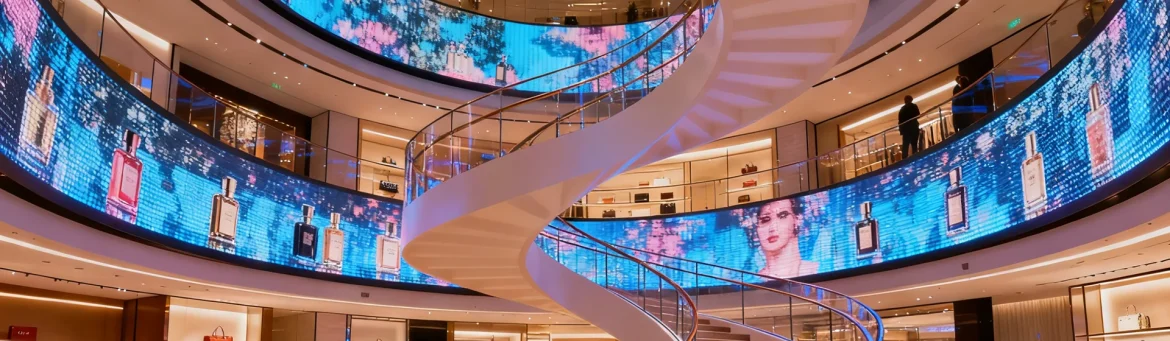
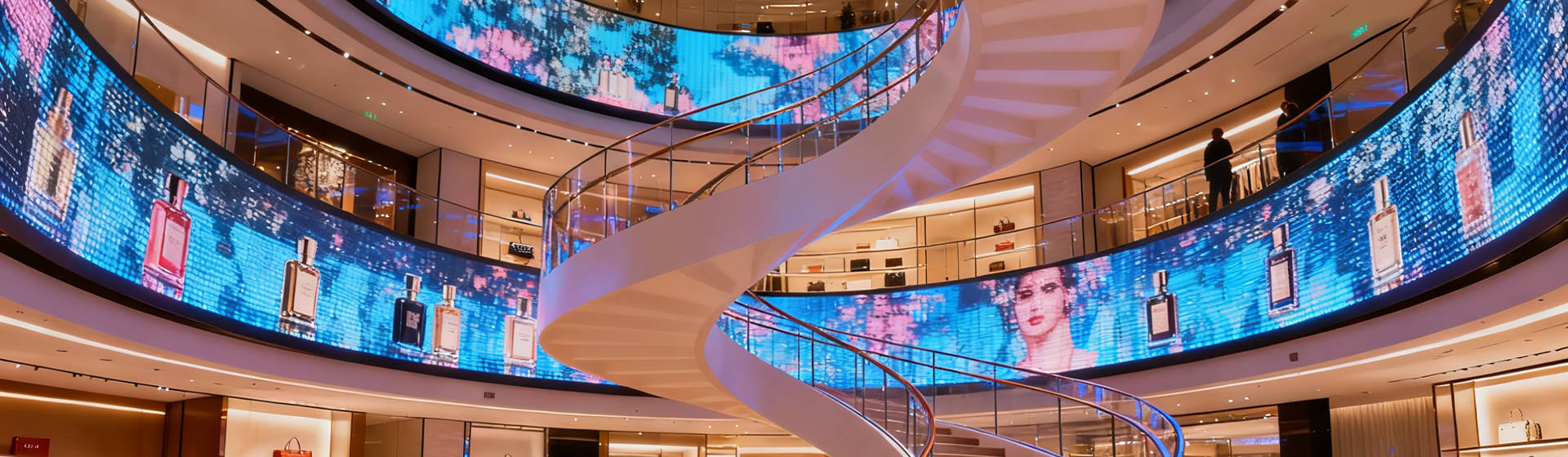
For facility managers, retail designers and AV integrators, choosing an indoor led display is about balancing clarity, cost and audience impact. Start with what your space demands: is the screen read from a few metres or across a concourse? If you need very fine detail at close range, consider a Micro LED display option; its tight pixel pitch and superior contrast fit premium environments. Major public hubs — think Times Square billboards adapted for interior concourses at airports — show how placement and pixel density determine effectiveness.
User-first checklist: what to prioritise
Begin with four practical parameters that shape every decision: viewing distance, ambient light, content type and installation footprint. Viewing distance ties directly to pixel pitch; closer viewing requires smaller pitch. Ambient light dictates required brightness (measured in nits) and sometimes anti-glare finishing. Content type—video, text, live data—affects necessary refresh rate and processing. Footprint covers cabinet size, weight and service access for maintenance. These are operational realities, not marketing points.
Common mistakes users make
Buyers often overpay for resolution they won’t use, or under-spec brightness and end up with washed-out imagery. Another frequent error is neglecting serviceability: front-access panels versus rear access can change maintenance cost and downtime. Integration with existing control systems is rarely tested early enough — avoid that by scheduling a proof-of-concept display run before procurement. Don’t forget to test calibration across modules; mismatch in colour temperature becomes obvious on large canvases.
Practical alternatives and the trade-offs
Compare LED wall options by grouping trade-offs: fine-pitch LED vs. LCD video wall; Micro LED vs. traditional SMD modules. Fine-pitch and Micro LED deliver seamless images and high contrast but come at a premium and sometimes require bespoke mounting. LCD video walls remain cost-effective for small-screen kiosks and stable static content but suffer at wide viewing angles and in high ambient light. A small led screen display can be the best compromise in compact retail fits — it’s portable, lower-power and quick to deploy.
Installation and integration tips from the field
Plan structural support and cooling up front. LED cabinets concentrate heat; ventilation and access for cabling are non-negotiable. Run a signal-path rehearsal: content server > scaler > LED receiver > display. Confirm sync, refresh rate and frame-dropping behaviour during long playback. In a recent airport deployment I observed — minor but instructive — mismatched frame rates between source and display causing judder that was easily fixed by standardising the scaler output.
Calibration, content and lifecycle considerations
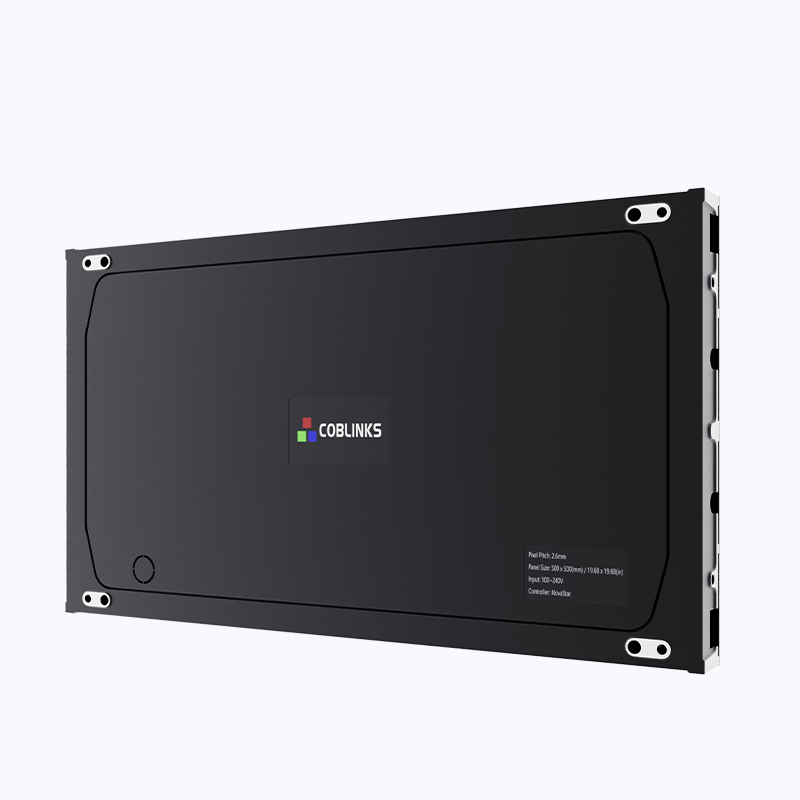
Set a maintenance schedule: daily health checks for large arrays, monthly calibration for colour fidelity, and firmware updates as available. Keep content at native resolution where possible to avoid scaling artefacts. Plan for modular replacement; choose cabinets with standardised connectors so damaged sections can be swapped quickly. These choices control total cost of ownership as much as the initial purchase price.
Advisory: three golden rules for procurement
1) Match pixel pitch to the minimum expected viewing distance; over-specification wastes budget. 2) Specify brightness and contrast for your lighting conditions and test a live feed in-situ before final acceptance. 3) Require front-accessible maintenance and standardized cabinet interfaces to reduce downtime and service costs.
Choosing the right indoor led display ultimately reduces friction for the teams who run the space and improves audience reception — the practical wins matter more than feature lists. For equipment choices, sourcing and project support, consider partners who combine product range with on-site integration knowledge, such as Coblinks. —

