

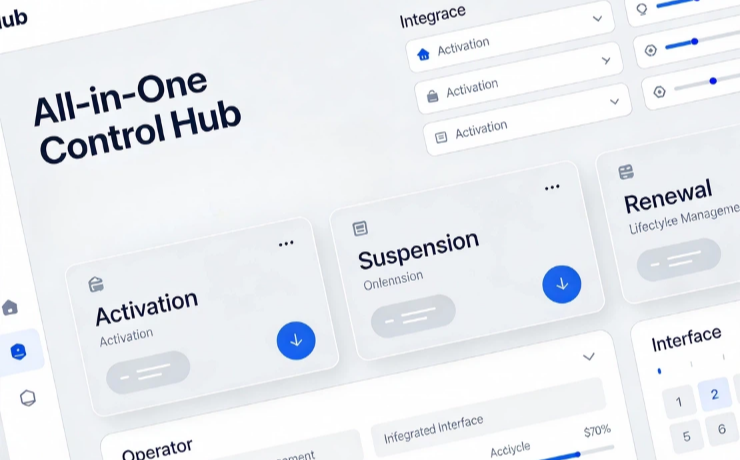
Problem statement: hardware lifecycles vs. connectivity churn
Commercial hardware in retail, logistics, and facilities is designed to last five to ten years, yet cellular and network provisioning models change every 18–36 months. The mismatch generates technical debt at scale: devices with hard-coded APNs, vendor-specific SIM profiles, or brittle firmware update paths become maintenance liabilities. Adopting an iot connectivity management platform early reduces that debt by decoupling device identity, transport, and orchestration from physical hardware.
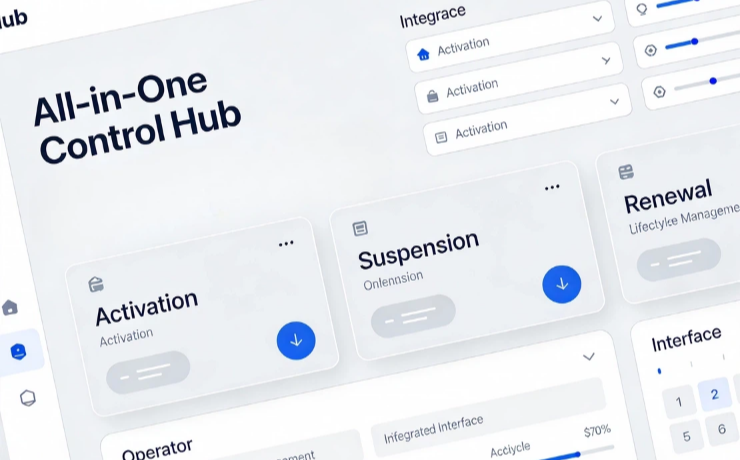
Technical constraints that drive the engineering approach
Successful long-lived deployments require deterministic answers for three variables: connectivity lifecycle, firmware lifecycle, and security lifecycle. Engineers must plan for SIM provisioning and eSIM profile management, OTA updates with integrity checks, and segmented network access (VLANs or private APNs). Each element imposes operational requirements on the connectivity layer: identity binding, revocation procedures, and telemetry sampling rates for troubleshooting.
Platform capabilities that matter
Not all connectivity platforms are equivalent. Prioritize solutions that provide centralized SIM lifecycle APIs, fine-grained policy controls, and device shadowing or device twin capabilities. Look for multi-carrier roaming strategies and automated fallbacks to maintain session persistence. Real deployments—such as logistics terminals at the Port of Rotterdam—show that multi-modal connectivity and granular telemetry reduce downtime during carrier outages and speed root-cause analysis on congested networks.
Integration pattern: how to wire connectivity into hardware sustainably
Start with a layered design: secure boot and hardware root-of-trust at the device level, modular connectivity stack (cellular modem + fallback Wi‑Fi or LoRaWAN), and a thin orchestration agent that speaks to your management plane. Implement MQTT or HTTPS heartbeat telemetry with adaptive sampling to limit data costs while preserving observability. For provisioning, shift to remote SIM provisioning (RSP) or eSIM profiles to enable rehoming between carriers without physical intervention.
Common mistakes and mitigation steps
Teams often lock firmware to a carrier-specific stack or expose device management ports on production networks. Those are operational traps—firmware maintenance windows become migration blockers and open ports increase attack surface. Mitigate by enforcing a single OTA pipeline with rollback, testing update images on a staging fleet, and using private APNs or IPsec tunnels for management traffic. Monitor configuration drift continuously—small changes compound over years, and unmanaged drift is the main driver of unplanned field visits.

Operational checklist before rollout
Deploy a brief preflight checklist that covers: certificate lifecycle automation, simulated carrier failover, staged OTA validation, and defined SLA for remote remediation. Include load tests that emulate peak registration spikes and measure time-to-provision for new SIM profiles. These tests expose bottlenecks in your orchestration APIs and reveal where automation is necessary to avoid manual intervention.
Evaluation metrics — three golden rules for choosing and measuring platforms
1) Mean time to reprovision: measure the elapsed time from revocation to active service on an alternate profile. 2) OTA success rate under constrained links: quantify percentage of devices that complete an update at minimal bandwidth. 3) Telemetry fidelity vs. cost: identify the minimal sampling strategy that still yields actionable diagnostics. These metrics translate design goals into procurement criteria and operational KPIs.
Summary and operational fit
Future-proofing commercial hardware is a systems engineering task: it blends secure device identity, flexible connectivity (eSIM/RSP, multi-carrier), and robust OTA/telemetry pipelines. The Port of Rotterdam case illustrates that when connectivity is treated as a managed product rather than an afterthought, uptime and maintainability improve measurably. Implement the checklist, track the three metrics, and avoid carrier-tied firmware—those choices preserve hardware value and reduce field maintenance costs.
Adopt a platform that supports device rehoming, policy-driven connectivity, and automated provisioning—those capabilities make hardware resilient to carrier cycles. For practical integration and a vendor-neutral orchestration layer, consider how a mature vendor complements your in-house tooling; the right partner minimizes bespoke plumbing and accelerates stable operations. iot connectivity management platforms fit naturally into this architecture by centralizing lifecycle controls and telemetry aggregation.
Listen to operational signals and measure outcomes. Those three rules are your guardrails. BHDC. —